
⚡ Quick Answer: How to Report Workplace Retaliation to the EEOC
- Immediate Action / Statutory Deadline: File a formal Charge of Discrimination (EEOC Form 5) within 180 calendar days of the retaliatory act (extended to 300 days in states with a Fair Employment Practices Agency).
- Primary Regulatory Agency: File online via the EEOC Public Portal at eeoc.gov or with your State Department of Civil Rights / Human Rights Commission.
- Statutory / Legal Remedy: Reinstatement, full back pay with interest, front pay, compensatory and punitive damages up to $300,000 under 42 U.S.C. § 1981a, and mandatory attorney fees.
Suffering sudden termination, demotion, hostile write-ups, or shift cancellations days after reporting harassment, requesting disability accommodations, or raising wage violations is an unlawful retaliatory practice. When corporate leadership or human resources retaliate against workers exercising statutory rights, knowing how to report workplace retaliation and wrongful termination to the EEOC enables you to preserve vital evidentiary timelines, initiate formal federal civil rights investigations, and secure substantial financial remedies.
Retaliation is the single most frequently charged violation under federal employment law, accounting for over 50% of all filings before the Equal Employment Opportunity Commission. Under Section 704(a) of Title VII of the Civil Rights Act of 1964 (42 U.S.C. § 2000e-3), the Americans with Disabilities Act (ADA), and the Age Discrimination in Employment Act (ADEA), employers are strictly prohibited from taking adverse employment actions against any employee who engaged in “protected activity.” Crucially, you can prevail on an unlawful retaliation claim even if the underlying discrimination claim is ultimately dismissed.

How Do I File an EEOC Complaint with the EEOC Office for Workplace Retaliation?
To report workplace retaliation and wrongful termination, compile a contemporaneous journal of protected activities and adverse employer actions, submit an online inquiry through the EEOC Public Portal within 180 or 300 calendar days, participate in an intake interview, and request a formal Right-to-Sue Notice for federal court litigation.
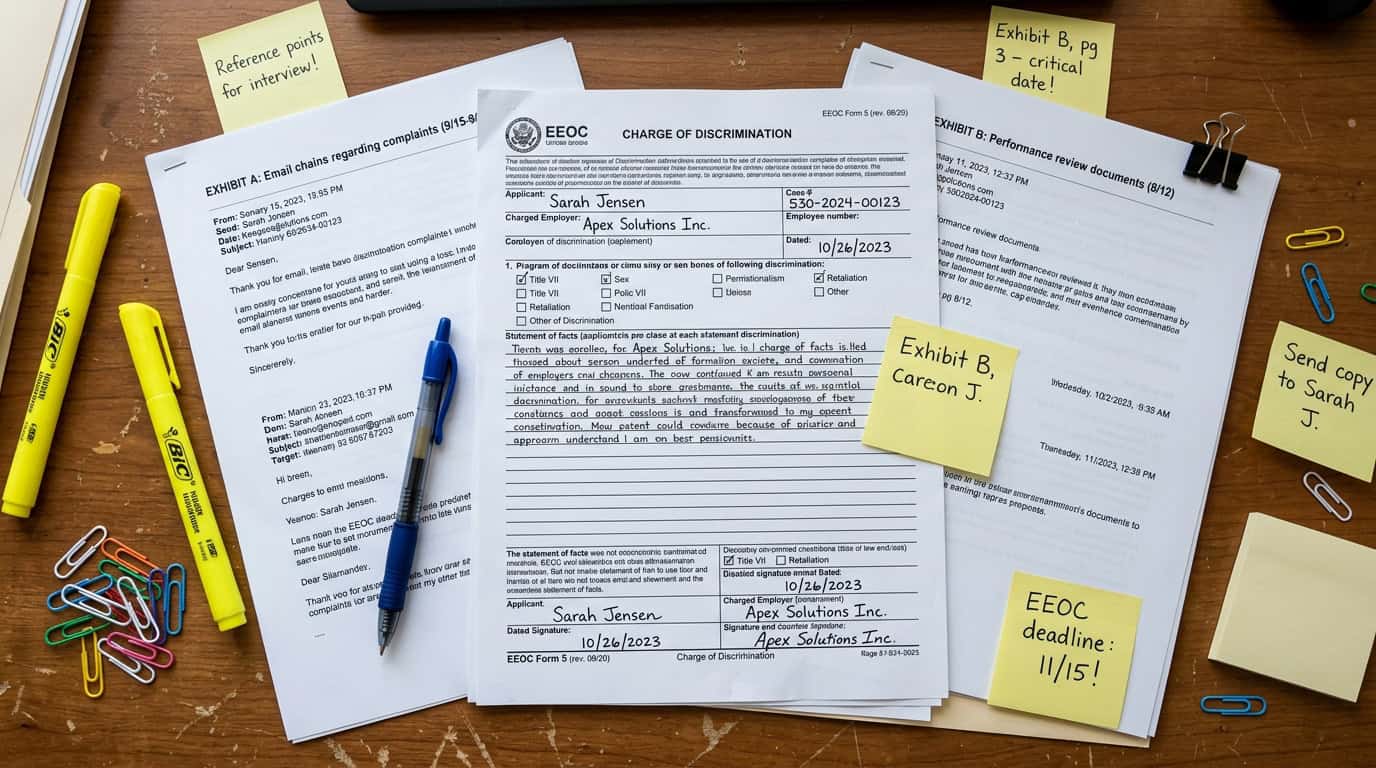
- Compile Your Retaliation Evidence Log: Assemble emails, performance evaluations, termination letters, and disciplinary records documenting pretext.
- File an EEOC Inquiry: Submit a complaint through the EEOC Public Portal (eeoc.gov) within the mandatory 180 or 300-day filing window.
- Request a Right-to-Sue Notice: If EEOC conciliation fails, obtain a Right-to-Sue letter to file a civil lawsuit in federal district court.
Recognizing Unlawful Workplace Retaliation & Employment Discrimination Claims
Federal civil rights statutes protect employees and job applicants across private industry and the federal sector. Title VII of the Civil Rights Act, the ADA, and the ADEA prohibit retaliation against any individual who opposes unlawful employment practices based on race, color, national origin, religion, sex (including pregnancy, sexual orientation, and gender identity), age, or disability. Under federal law, every worker is protected from retaliation whether filing a formal EEO complaint, requesting a reasonable accommodation, or participating as a witness in an ongoing investigation.
To establish a prima facie case of unlawful retaliation before the EEOC and federal courts under the *McDonnell Douglas* evidentiary framework, three distinct legal elements must be documented:
- Engagement in Protected Activity: You engaged in legally protected conduct, such as lodging an internal HR complaint regarding racial or sexual harassment, filing an OSHA safety report (governed by the strict 30-day statutory filing window under Section 11(c)), participating as a witness in an ongoing EEOC inquiry, requesting a reasonable religious or medical accommodation, or protesting unequal pay.
- Materially Adverse Employment Action: The employer subjected you to an action that could dissuade a reasonable worker from making or supporting a charge of discrimination. Under *Burlington Northern & Santa Fe Railway Co. v. White* (548 U.S. 53), adverse actions include termination, constructive discharge, suspension, demotion, salary reduction, undesirable shift reassignments, exclusion from mandatory training, or sudden negative performance reviews that contradict prior accolades.
- Causal Connection (Temporal Proximity): A clear nexus connects your protected activity to the adverse action. Temporal proximity—where discipline occurs days or weeks after the complaint—serves as primary circumstantial evidence of retaliatory intent before the employer can manufacture pretextual justifications.
Step-by-Step Complaint Process: How to File a Charge via the EEOC Public Portal
Step 1: Secure Your Personal Evidence File Before Systems Access Is Revoked
Upon suspecting retaliatory discipline, employers routinely cut off corporate email, Slack, and HR portal access without notice. Lawfully preserve all relevant personal records from external personal devices:
- Dated copies of your initial complaint to HR, management, or safety inspectors.
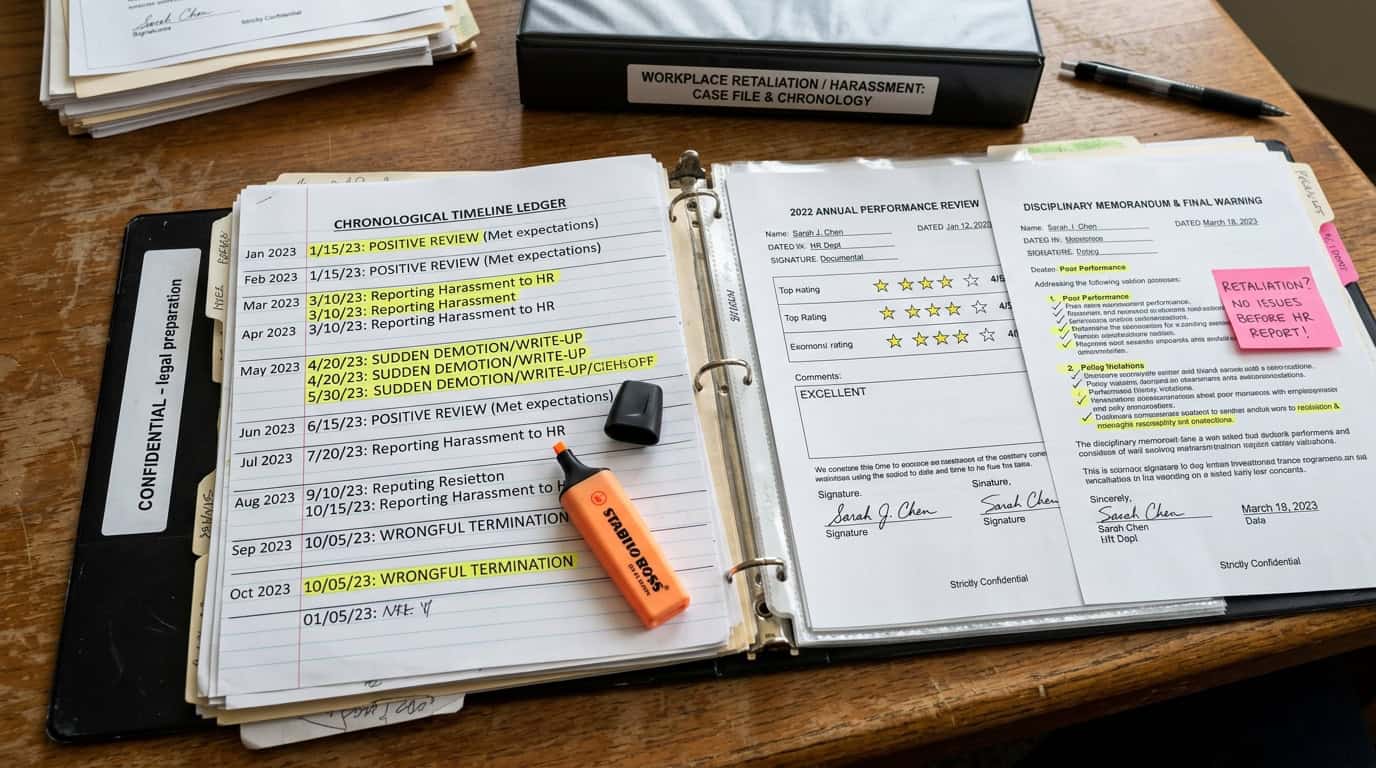
- Prior performance reviews, bonus awards, commendation emails, and client reviews demonstrating satisfactory or exemplary job performance before the protected report.
- Contemporaneous calendar notes detailing dates, times, attendees, and exact verbal statements during disciplinary meetings.
- Comparative evidence demonstrating that non-reporting colleagues committed similar minor infractions without facing termination or discipline.
Step 2: Submit an Online Inquiry via the EEOC Public Portal
When you access the EEOC Public Portal online, ensure you connect through official .gov secure websites to share sensitive information safely. The Equal Employment Opportunity Commission investigates job discrimination, workplace harassment, and retaliation at work affecting both private and federal employees, as well as job applicants. Federal laws enforced by EEOC protect workers against discrimination or harassment based on race, color, national origin, sex, religion, age (workers 40 or older), disability, genetic information, or unequal pay under the Equal Pay Act. If you were harassed at work or subjected to adverse employment actions after opposing workplace discrimination, you can submit an initial inquiry to schedule an interview with an EEOC staff member at your nearest regional EEOC office.
Navigate to the official EEOC Public Portal at eeoc.gov to complete an online intake questionnaire. You will provide your employer’s legal entity name, corporate headquarters address, total employee headcount (determining statutory damage caps), and a detailed chronological statement of adverse retaliatory actions.
Step 3: Complete Your Intake Interview and Sign EEOC Form 5
Submitting an intake questionnaire does not legally toll the statutory filing deadline until a verified Form 5 (Charge of Discrimination) is signed under penalty of perjury. Schedule and attend your virtual or in-person EEOC intake interview with an assigned federal investigator. After the interview, review the drafted Form 5, verify that “Retaliation” is explicitly checked alongside underlying protected categories, and electronically sign the charge.
Dual-Filing with a Local Fair Employment Practices Agency (FEPA)
Most states and municipalities have local fair employment practices agencies that enforce regional human rights codes concurrently with federal statutes. When filing a complaint of discrimination or workplace retaliation, dual-filing provisions allow the EEOC and state agencies to cross-file your case under joint work-sharing agreements. If you are employed in the federal sector or work for a federal government employer, specific federal sector equal employment opportunity complaint processing guidelines apply, which require contacting an agency EEO counselor within 45 calendar days. For complex multi-jurisdiction cases, consulting a private attorney specializing in employment law helps protect your fundamental workplace rights before deadlines lapse.
Step 4: Dual-Filing Protection with State Civil Rights Agencies (FEPAs)
Under federal employment law, local Fair Employment Practices Agencies (FEPAs) enforce state or local anti-discrimination statutes. When a discrimination complaint with the EEOC or job discrimination complaint is submitted, work-sharing agreements automatically protect your rights across both jurisdictions without needing to file duplicate claims.
In states with fair employment practices laws (such as California DFEH/CRD, New York Division of Human Rights, or Illinois DHR), checking the dual-filing box on Form 5 automatically cross-files your complaint with state authorities. This preserves your rights under both state laws (which frequently offer uncapped compensatory damages) and federal Title VII provisions.

Step 5: Navigate EEOC Mediation, Investigation, and the Right-to-Sue Notice
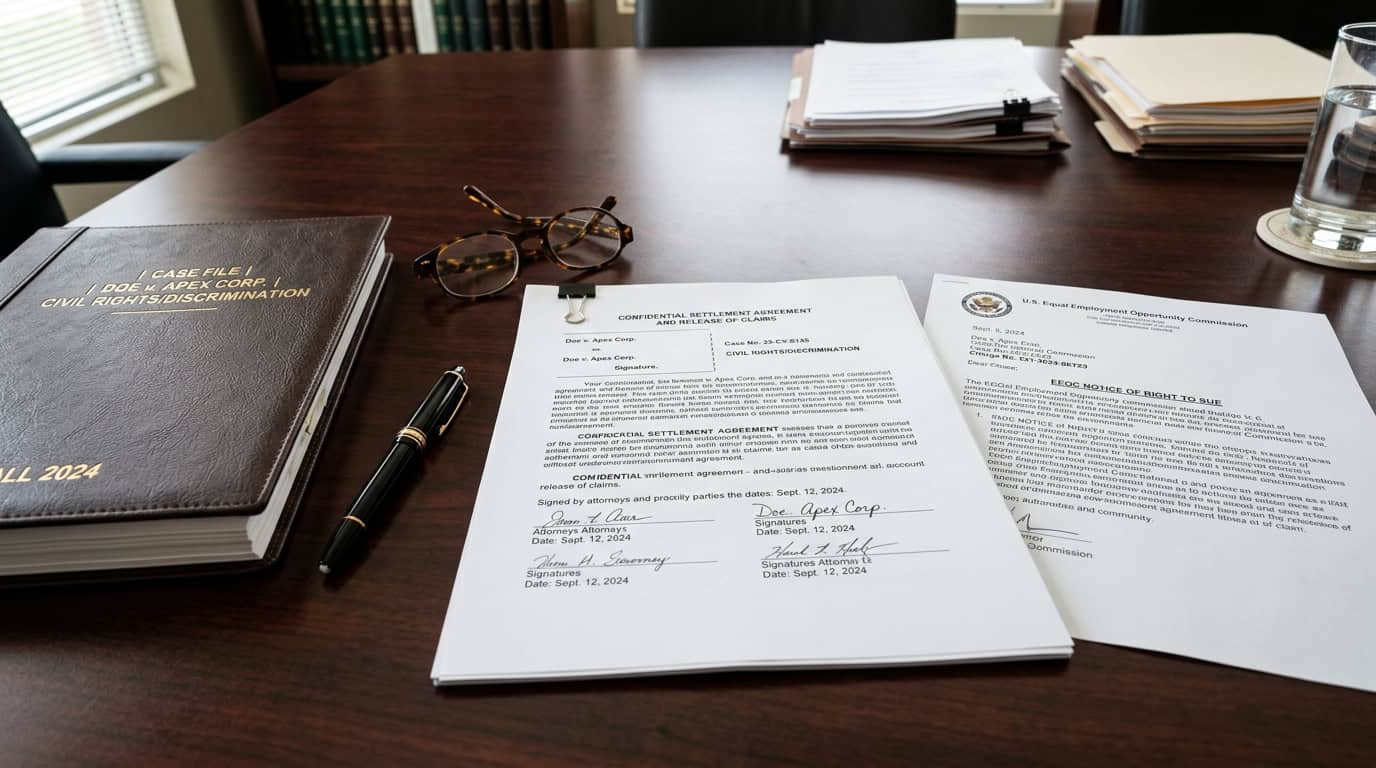
Once Form 5 is served on your employer, the EEOC typically offers voluntary formal mediation. If mediation is declined or unsuccessful, the employer must submit a formal Position Statement, which you have the right to inspect and rebut. Upon completing the investigation—or upon request after 180 days—the EEOC issues a Notice of Right to Sue. You have strictly 90 calendar days from receipt of this notice to file a civil complaint in United States District Court.
The EEOC Public Portal will provide you with step-by-step intake questions to submit all necessary information to the EEOC securely. Because statutory deadlines are strictly enforced, you must file your charge quickly to protect your right to file a civil action. In most cases, federal statutes require you to file a timely charge with the administrative agency before you can file a job discrimination lawsuit against your employer in federal court.
EEOC Retaliation Escalation Roadmap
🧯 5-Phase EEOC Workplace Retaliation Escalation Roadmap
Export personal performance reviews, bonus records, complaint emails, and write-ups to non-work devices.
Submit intake questionnaire on eeoc.gov, attend intake interview, and sign verified Charge of Discrimination.
Review employer defense statement, expose pretextual excuses, and submit cross-examination evidence.
Obtain Right-to-Sue letter. File civil lawsuit in US District Court within 90 days for back pay and punitive damages.
Statutory Time Limits for Filing a Charge & State or Local FEPA Deadlines
⚖️ Statutory Deadlines & Employer Liability Damage Caps Matrix
Retaliation Claims, Workplace Harassment & Employment Law Myths
🛡️ Common Retaliation Myths vs. Statutory Legal Realities
At-will employment does not shield unlawful retaliation. Federal and state civil rights statutes supersede at-will employment doctrines across all 50 states.
As long as you held a good-faith belief that you were opposing unlawful practices, terminating you for complaining remains illegal even if the underlying complaint is dismissed.
Severance clauses barring you from filing an EEOC charge or assisting in federal investigations are void against public policy under 29 C.F.R. § 1625.22.
Under Title VII fee-shifting statutes (42 U.S.C. § 2000e-5(k)), employers must pay all reasonable attorney fees and expert witness costs incurred by the employee.
Formal Notice of Retaliation & Evidence Preservation Demand
Serving a formal certified pre-litigation demand letter puts employer corporate leadership and general counsel on legal notice to suspend automatic document deletion cycles under federal spoliation of evidence rules.
📜 Formal Notice of Unlawful Retaliation & Demand for Evidentiary Preservation
SENT VIA CERTIFIED MAIL - RETURN RECEIPT REQUESTED
Date: [Date]
Certified Mail Tracking Number: [Certified Mail Tracking #]

To:
[Employer Legal Entity / Corporate Name]
Attn: General Counsel / Chief Human Resources Officer
[Corporate Headquarters Address]
[City, State, ZIP Code]

RE: FORMAL NOTICE OF UNLAWFUL WORKPLACE RETALIATION & DEMAND FOR COMPREHENSIVE EVIDENTIARY PRESERVATION (LITIGATION HOLD)

Dear Corporate Officers and Legal Counsel:

PLEASE TAKE NOTICE that the undersigned employee, [Your Full Legal Name], hereby serves this formal pre-litigation notice concerning unlawful workplace retaliation and adverse employment actions undertaken in violation of Title VII of the Civil Rights Act of 1964 (42 U.S.C. § 2000e-3), the Americans with Disabilities Act, and applicable state civil rights statutes.

FACTUAL SUMMARY OF PROTECTED ACTIVITY & RETALIATION:
1. Protected Activity: On [Date of Protected Complaint], I engaged in legally protected activity by [Describe protected report, e.g., filing a formal written report of unlawful harassment / reporting wage non-compliance / requesting ADA medical accommodations].
2. Exemplary Prior Performance: Prior to engaging in this protected conduct, my employment record was exemplary, evidenced by [Describe prior accolades, performance reviews, or absence of prior disciplinary write-ups].
3. Retaliatory Adverse Action: On [Date of Adverse Action], exactly [Number of Days/Weeks] following my protected activity, management subjected me to [Describe retaliatory action, e.g., wrongful termination / constructive discharge / pretextual written reprimand / demotion and pay cut].

LEGAL DEMAND FOR IMMEDIATE LITIGATION HOLD & DOCUMENT PRESERVATION:
You are hereby formally notified of impending administrative and civil litigation. Under federal spoliation doctrines, you must immediately implement a comprehensive legal hold suspending all automated email deletion, auto-archiving, and backup tape rotation protocols. You must preserve:
1. All internal emails, Slack/Teams messages, text messages, and internal memos referencing my name, performance, or termination between [Date of Hire] and the present date.
2. All human resources files, internal investigative notes, and witness statements regarding my complaint.
3. Personnel files and comparative disciplinary records of all employees in my department who did not engage in protected activity.

PRE-LITIGATION SETTLEMENT DEMAND:
To avoid public filing of formal charges with the Equal Employment Opportunity Commission (EEOC) and subsequent federal court litigation seeking uncapped back pay, front pay, compensatory damages, punitive damages, and statutory attorney fees under 42 U.S.C. § 1981a, I demand that you contact me in writing within fourteen (14) calendar days of receipt of this notice to discuss an amicable resolution.

Sincerely,

[Your Full Legal Name]
[Your Mailing Address]
[Your Phone Number]
[Your Personal Email Address]

CC:
Personal Legal Counsel / Representative File
EEOC Regional Office Records
If public works contractors shorted your fringe benefits or altered time cards, see our enforcement protocol on How to Report Prevailing Wage Violations & Public Works Payroll Fraud.
Frequently Asked Questions About Workplace Retaliation
What is the exact deadline to file an EEOC retaliation charge?
In states without a local Fair Employment Practices Agency, you have strictly 180 calendar days from the date the retaliatory action occurred. In states with an active state civil rights enforcement agency (covering the majority of US workers), the deadline is automatically extended to 300 calendar days. Missing this statutory window permanently forfeits your federal civil rights claims.
Can my employer fire me for filing an EEOC charge?
No. Terminating an employee for filing an EEOC charge or cooperating with federal investigators constitutes per se unlawful retaliation under 42 U.S.C. § 2000e-3. If an employer fires you after learning of an EEOC charge, the agency can petition a federal court for immediate emergency preliminary injunctive relief ordering your immediate reinstatement.
What financial damages can I recover in an EEOC retaliation lawsuit?
Successful retaliation claimants can recover complete back pay (all lost wages, bonuses, and benefits with pre-judgment interest), front pay (future lost compensation if reinstatement is infeasible), compensatory damages for emotional distress, punitive damages for malicious conduct (up to $300,000 depending on company size), and mandatory employer payment of all your attorney fees.
Do I need an attorney to file an EEOC complaint?
No. The EEOC process is designed to allow individual workers to file charges without legal representation. However, consulting with an experienced employment attorney is highly advantageous, particularly when responding to an employer’s position statement, negotiating mediation settlement agreements, or preparing for federal court litigation.
Official Civil Rights Enforcement Portals & Regulatory Statutes
- EEOC Public Portal: Submit online intake and schedule investigator interviews at eeoc.gov or 1-800-669-4000
- Title VII Civil Rights Act (42 U.S.C. § 2000e-3): Federal anti-retaliation statutory text via govinfo.gov
- Department of Labor Whistleblower Protection: Federal worker rights directory at whistleblowers.gov
- State Fair Employment Practices Agencies (FEPA): Directory of state civil rights agencies at howtoreport.org/report-by-state
Damages Under ,000? Check Your State Small Claims Limit
If administrative complaints fail to recover your financial losses, you can sue in local small claims court without expensive attorney fees. Select your state below for instant dollar limits and statutory deadlines:
Related Statutory Reporting Guides & Citizen Protections
Official step-by-step reporting protocols in this regulatory category.


Before you go…
Challenging unlawful workplace retaliation requires prompt documentation, adherence to strict statutory filing windows, and meticulous evidence preservation. File with the EEOC before your filing deadline expires, and deliver formal spoliation notices to protect electronic records.
HowToReport.org is an independent educational site — not a government agency. We link to official .gov and .org sources, but we cannot file a complaint for you or give legal advice. Read our full Legal Disclaimer & Safe Harbor →
What happens next
- Most agencies send an acknowledgment or reference number — save it with your copies.
- Investigations vary by agency; complex cases can take weeks or months.
- If you do not hear back within the timeframe listed on the agency site, follow up in writing.
- Keep reporting to additional agencies if your issue crosses categories (for example, fraud plus billing).
Official Agency Portals & Governing Statutory References
Verified government filing portals (.gov) and statutory limitation deadlines
Verified Primary Regulatory Portals
- Federal Trade Commission (FTC): ReportFraud.ftc.gov
- U.S. Dept. of Housing & Urban Development (HUD): HUD.gov/FairHousing
- Consumer Financial Protection Bureau (CFPB): ConsumerFinance.gov/complaint
- FBI Internet Crime Complaint Center (IC3): IC3.gov Internet Crime Portal
Mandatory Notice & Evidentiary Protocols
- Certified Mail Requirement: Always dispatch formal demands via USPS Certified Mail with Return Receipt Requested to ensure statutory admissibility in court.
- Statutory Deadlines: Habitability emergency notices require 24–48 hour action; standard civil repair demands require 7–14 business days before court escrow.
- Jurisdictional Order: Secure municipal inspection reports (311 or Code Enforcement) prior to filing formal administrative or small claims actions.
Was this guide helpful?
Need Specific Filing Rules & Regulators for Your State?
Statutes of limitations, small claims court filing limits, and state agency oversight vary widely across jurisdictions. Access verified State Attorney General portals, labor divisions, and contractor boards across all 50 states.
1 thought on “How to Report Workplace Retaliation to the EEOC: File a Charge & Complaint Process”