
If a consumer product malfunctioned, caught fire, or caused injury, do not throw it away. Preserve the physical item, packaging, and receipt. File an official safety report with the U.S. Consumer Product Safety Commission (CPSC) at SaferProducts.gov (or call 1-800-638-2772 ) to trigger federal recall investigations.
⚖️ Facing Damages or Unreturned Funds Under $25,000?
Check your state small claims court dollar ceiling, statutes of limitations, and attorney representation rules.
How Do I Report a Defective Product?
You can report a defective or unsafe consumer product directly to the Consumer Product Safety Commission (CPSC) via SaferProducts.gov. For dangerous vehicles or car parts, submit complaints to the National Highway Traffic Safety Administration (NHTSA). Food and medical device issues fall under Food and Drug Administration (FDA) jurisdiction.
- Gather Evidence: Keep the product, its original packaging, purchase receipts, and medical records if an injury occurred.
- File Your Report: Submit an incident report on SaferProducts.gov or the appropriate federal agency portal for the product type.
- Follow Up: Contact the manufacturer to demand a refund, and consult a product liability attorney for serious injuries.
Learning how to report a defective product protects millions of consumers from severe injuries, electrocution hazards, exploding lithium-ion batteries, and choking hazards in children’s toys. The Consumer Product Safety Commission (CPSC) regulates over 15,000 types of consumer goods, while specialized agencies like the FDA (medical devices/cosmetics) and NHTSA (vehicles/car seats) handle sector-specific hazards. Understanding how to preserve the physical product without altering evidence, submit formal incident reports on SaferProducts.gov, and file product liability compensation claims ensures manufacturers are held strictly accountable.
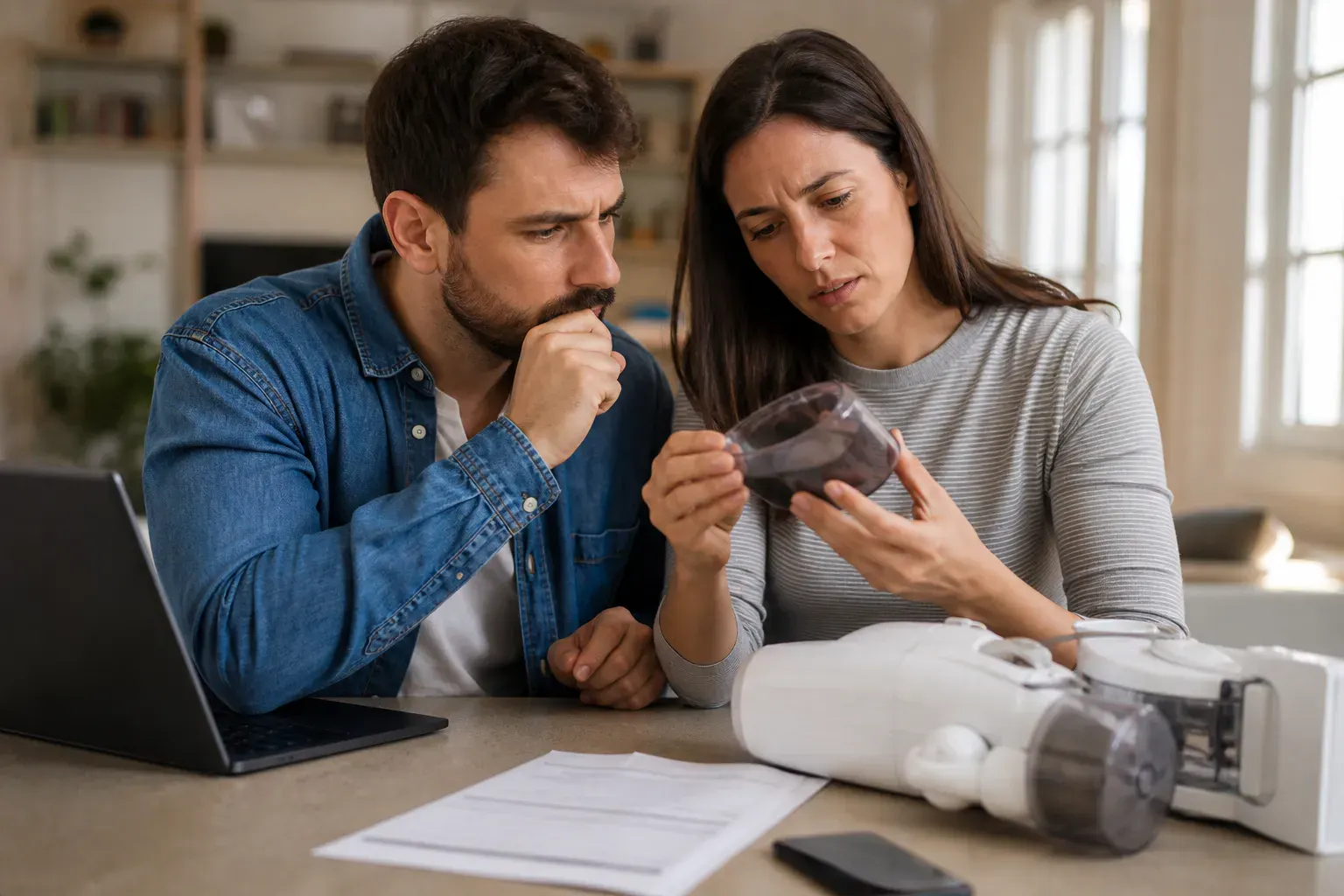
Never throw away the broken item, repair it yourself, or return it to the retailer/manufacturer before documenting it. The actual physical unit with its serial number, burn marks, or fractured parts is the single most critical piece of legal evidence required for both CPSC recalls and personal injury restitution.
Product Defect Classification: Categories of Hazards
Classify the specific defect type to determine legal liability under strict product liability laws.
The product’s fundamental engineering is inherently dangerous, even when manufactured perfectly (e.g., top-heavy dressers prone to tip-overs).
An error occurred during factory production, causing a specific batch to fail (e.g., cracked lithium battery cells causing hoverboard fires).
Inadequate safety labels, missing age warnings, or failure to provide clear instructions regarding known electrocution or burn risks.
Where to Report: Federal Safety Agency Matrix
Route your complaint to the appropriate federal safety regulator based on product category.
- Covers: Electronics, appliances, furniture, power tools, children’s toys.
- Portal:
SaferProducts.gov/ 1-800-638-2772. - Action: Issues nationwide mandatory recalls and safety warnings.
- Covers: Automobiles, airbags, brakes, seatbelts, child car seats.
- Portal:
NHTSA.gov/recalls/ 1-888-327-4236. - Action: Mandates free dealer repairs and safety recall campaigns.
- Covers: CPAP machines, pacemakers, contact lenses, skincare products.
- Portal:
FDA.gov/MedWatch/ 1-800-FDA-1088. - Action: Issues Class I medical recalls for life-threatening defects.
Step-by-Step Guide to Reporting a Defective Product
Follow these 5 steps to preserve evidence, file federal safety reports, and demand manufacturer restitution.
Step 1: Preserving the Physical Product & Packaging
Maintain an unbroken evidentiary chain of custody:
- Do Not Alter the Item: Place the defective product, broken parts, and power cords in a clean storage bin. Do not attempt to repair or clean it.
- Keep Original Packaging: Save the retail box, user manual, warranty card, and purchase receipt showing the model and serial numbers.
- Take High-Resolution Photos: Capture close-up photos of burned components, snapped brackets, warning labels, and serial barcodes.

Step 2: Submitting an Official Report to SaferProducts.gov
The primary federal database that drives nationwide recalls:
- Visit SaferProducts.gov and click “Report an Unsafe Product”.
- Provide product details: Manufacturer, brand, model number, serial number, and retailer where purchased.
- Describe the incident: Date, exact sequence of events, injuries sustained, and property damage caused. Upload photos.
- By law, the CPSC forwards the report to the manufacturer within 5 business days and posts it to the public database within 10 days to warn other consumers.

Step 3: Sending a Formal Notice of Claim to the Manufacturer
Notify corporate risk management while preserving your rights:
- Send a written Notice of Defective Product Claim via USPS Certified Mail with Return Receipt to the manufacturer’s corporate headquarters.
- State the defect, attach photos, and list your out-of-pocket medical expenses or property damage.
- Important: Do not surrender or mail the physical product to the manufacturer without signing a formal evidence preservation protocol or retaining legal counsel.

Step 4: Tracking the CPSC Recall Investigation
How federal recall enforcement operates:
- CPSC compliance officers evaluate the hazard severity and injury reports.
- The agency negotiates a Corrective Action Plan (CAP) with the manufacturer, mandating a nationwide recall with free replacement parts, repair kits, or full refunds.
- Check ongoing recalls at
cpsc.gov/recalls.

Step 5: Pursuing Strict Product Liability Compensation
If the defect caused bodily injury, burns, or home fire damage:
- Consult an accredited product liability attorney. Under Strict Liability doctrine, you do not need to prove negligence—only that the product was defective and caused harm during intended use.
- Recover 100% of medical bills, lost wages, property repair costs, and pain and suffering damages.
Evidence Preparation Checklist & Submission Roadmap
Keep the broken product, packaging, serial numbers, and receipts untouched in storage.
Submit an official incident report to the CPSC database to trigger federal safety review.
Send certified Notice of Claim to manufacturer risk management with incident details.
CPSC mandates nationwide product recall while victims recover full compensation.
Formal Product Defect & Injury Claim Notice to Manufacturer Template
When placing a manufacturer on formal written notice of a product defect and financial claim, use this format:
SENT VIA USPS CERTIFIED MAIL
RETURN RECEIPT REQUESTED: [Tracking Number]
To: [Product Manufacturer / Retailer Legal Name]
Attn: Legal Department / Risk Management / Product Safety Division
[Corporate Headquarters Address]
[City, State, ZIP]
RE: FORMAL NOTICE OF DEFECTIVE PRODUCT, BREACH OF WARRANTY & DAMAGE CLAIM
Claimant Name: [Your Full Legal Name]
Product Description: [Brand, Model Name, and Model Number]
Serial Number / Date Code / Batch #: [Serial Number]
Date of Purchase: [Purchase Date] | Retailer / Seller: [Store or Online Retailer Name]
Incident Date: [Date Product Failed / Caused Injury or Damage]
CPSC SaferProducts.gov Report #: [Report Number if filed]
Dear Product Safety Director and Corporate Counsel:
Please accept this letter as formal statutory notice pursuant to the Uniform Commercial Code (UCC) § 2-607(3)(a) and applicable state strict product liability statutes that the product described above failed during ordinary, intended use, creating a severe safety hazard and resulting in substantial damages.
FACTUAL DESCRIPTION OF THE FAILURE:
1. NATURE OF THE DEFECT: The product exhibited a dangerous [design defect / manufacturing defect / electrical failure / fire hazard / structural collapse] when [describe normal usage leading to failure].
2. DAMAGES SUSTAINED:
– Property Damage: [Describe property damage, e.g., scorched countertop, water leakage, burned carpet] totaling $[Amount].
– Replacement Cost of Defective Item: $[Purchase Price].
– Medical Costs / Personal Injury (if applicable): [Describe medical expenses] totaling $[Amount].
TOTAL COMPENSATORY CLAIM: $[Total Disputed Amount].
PRESERVATION OF EVIDENCE NOTICE:
Please be advised that the defective product, including all associated cords, components, packaging, and fragments, has been safely impounded and preserved in an unaltered condition for joint engineering inspection and legal chain of custody.
DEMAND FOR RESOLUTION:
Pursuant to consumer protection laws and the Magnuson-Moss Warranty Act, I hereby demand full reimbursement in the amount of $[Total Amount] to compensate for the defective unit and consequential property damages.
Please remit payment or contact my office within fifteen (15) business days. In the absence of a satisfactory resolution, I will escalate this claim to Small Claims Court and request that the U.S. Consumer Product Safety Commission open a formal Section 15 recall inquiry.
Sincerely,
_________________________________________
[Your Signature]
[Your Printed Legal Name]
[Your Address]
Telephone: [Your Phone Number]
Email: [Your Email Address]



2 thoughts on “How to Report a Defective Product: CPSC Safety Recalls Guide”