To report police brutality, unlawful search, or civil rights violations, file a formal complaint with the department’s Internal Affairs Bureau (IAB) and your city’s independent Civilian Oversight Board . For systemic corruption or pattern-and-practice violations, submit a complaint to the U.S. Department of Justice (DOJ) Civil Rights Division at civilrights.justice.gov .
How Do I Report Police Misconduct?
Report police misconduct to the department’s internal affairs division or an independent civilian review board. Detail incidents of excessive force, illegal searches, or discriminatory profiling. External review boards and the Department of Justice can provide objective oversight when local departments fail to properly discipline officers for constitutional violations.
- Gather Evidence: Note the officer’s badge number, patrol car number, exact location, time, and secure names of witnesses or any video recordings.
- File Your Report: Submit a formal complaint to the internal affairs bureau, your local civilian oversight agency, or the state attorney general’s office.
- Follow Up: Request a copy of the final investigation report and consult a civil rights attorney to pursue financial damages for rights violations.
Learning how to report police misconduct is essential for holding law enforcement officers accountable, protecting constitutional rights, and securing video evidence before it is erased. When facing excessive physical force, unconstitutional stop-and-frisks, racial profiling, or fabricated criminal charges, citizens have clear statutory remedies under the Fourth and Fourteenth Amendments. Understanding how to issue evidence preservation demands for body-worn camera (BWC) footage, file Internal Affairs complaints, and consult Section 1983 civil rights attorneys ensures transparency and legal justice.

In every federal circuit across the United States, citizens have an unambiguous First Amendment constitutional right to film and audio-record police officers performing official duties in public. An officer cannot lawfully order you to stop filming, confiscate your phone, or delete video files without a judicial search warrant signed by a judge.
Misconduct Severity Classification: Categorizing the Violation
Classify the specific constitutional violation to determine the proper state or federal legal remedy.
Unnecessary baton strikes, taser deployments against compliant individuals, improper chokeholds, or unjustified firearm discharges.
Fourth Amendment violations: arresting without probable cause, searching vehicles/homes without consent or warrant, or fabricating police reports.
Retaliating against citizens for filming, turning off body-worn cameras during critical incidents, or concealing exculpatory evidence.
Where to Report: Police Accountability Matrix
Compare oversight bodies, investigation processes, and legal enforcement powers.
- Role: Internal and independent civilian administrative review.
- Channel: City Police Civilian Complaint Review Board (CCRB) / IAB.
- Power: Sustains policy violations, strips rank, terminates employment.
- Role: Federal oversight of systemic civil rights abuses (34 U.S.C. § 12601).
- Channel:
civilrights.justice.gov. - Power: Federal consent decrees, criminal indictments under 18 U.S.C. § 242.
- Role: Federal lawsuit filed by private civil rights attorneys.
- Channel: U.S. District Court (42 U.S. Code § 1983).
- Power: Binding monetary damages, compensatory awards, Monell municipal liability.
Step-by-Step Guide to Filing a Police Misconduct Complaint
Follow these 5 steps to preserve digital evidence, submit official complaints, and pursue legal accountability.
Step 1: Documenting Officer Identifiers & Scene Evidence
Record everything while details are fresh in your memory:
- Officer Identifiers: Name, badge number, uniform patch, patrol vehicle unit number, and police department name.
- Scene Details: Date, exact time, street address/intersection, names and phone numbers of civilian bystanders who witnessed the incident.
- Medical Photos: Photograph all cuts, bruises, taser burn marks, or lacerations immediately, and seek emergency room medical evaluation.
Step 2: Sending a Formal Spoliation & Evidence Preservation Letter
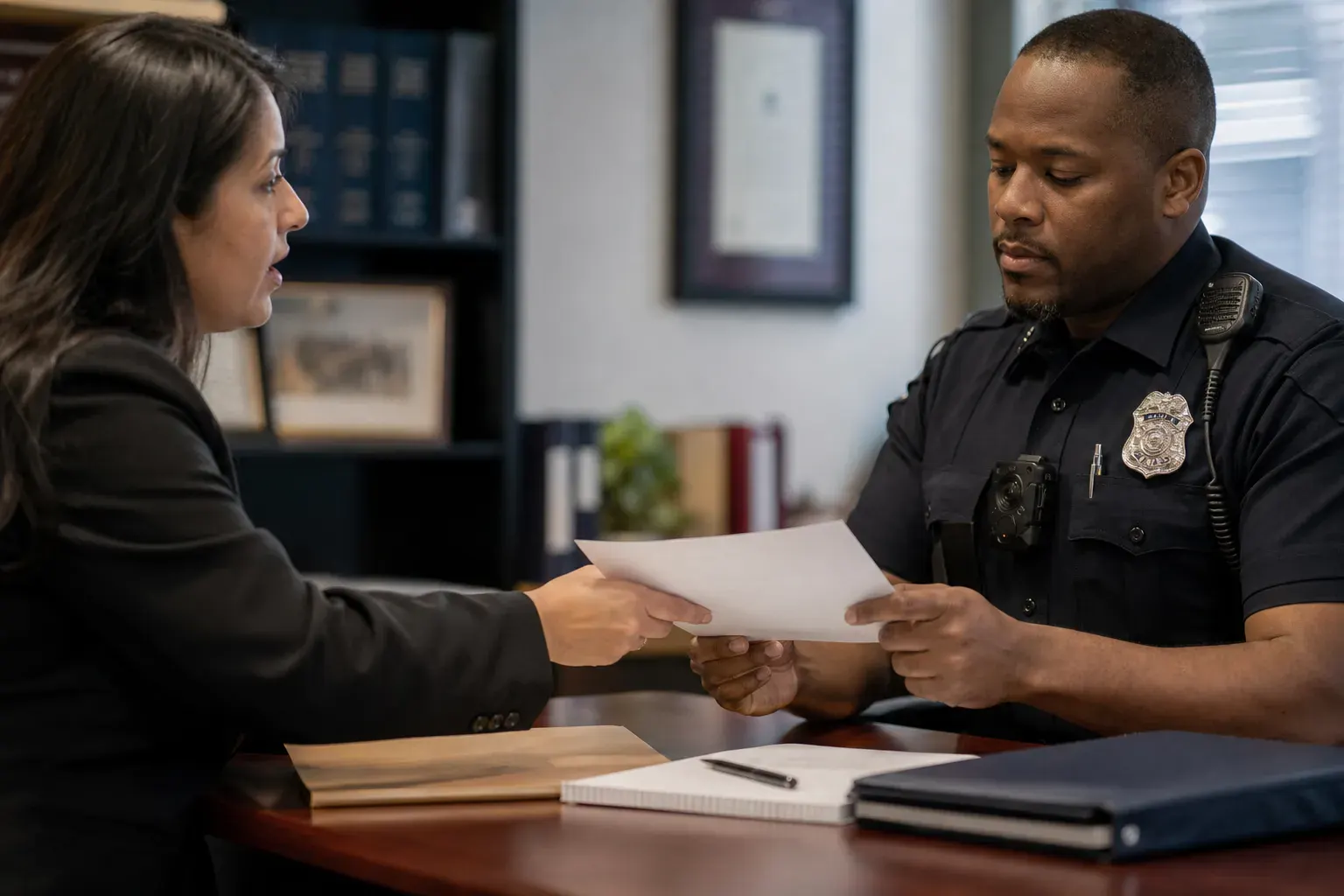
Police departments automatically overwrite video footage after 30 to 90 days unless a preservation notice is received:
- Send a written Notice to Preserve Evidence (Spoliation Notice) via USPS Certified Mail to the Chief of Police and City Attorney.
- Demand preservation of all Body-Worn Camera (BWC) video, cruiser dashcam recordings, CAD 911 dispatch audio tapes, and taser electronic download logs.
- If the department destroys video after receiving this letter, courts apply adverse evidentiary sanctions against the officers.
Step 3: Filing Complaints with Internal Affairs & Civilian Oversight
To launch formal administrative investigations:
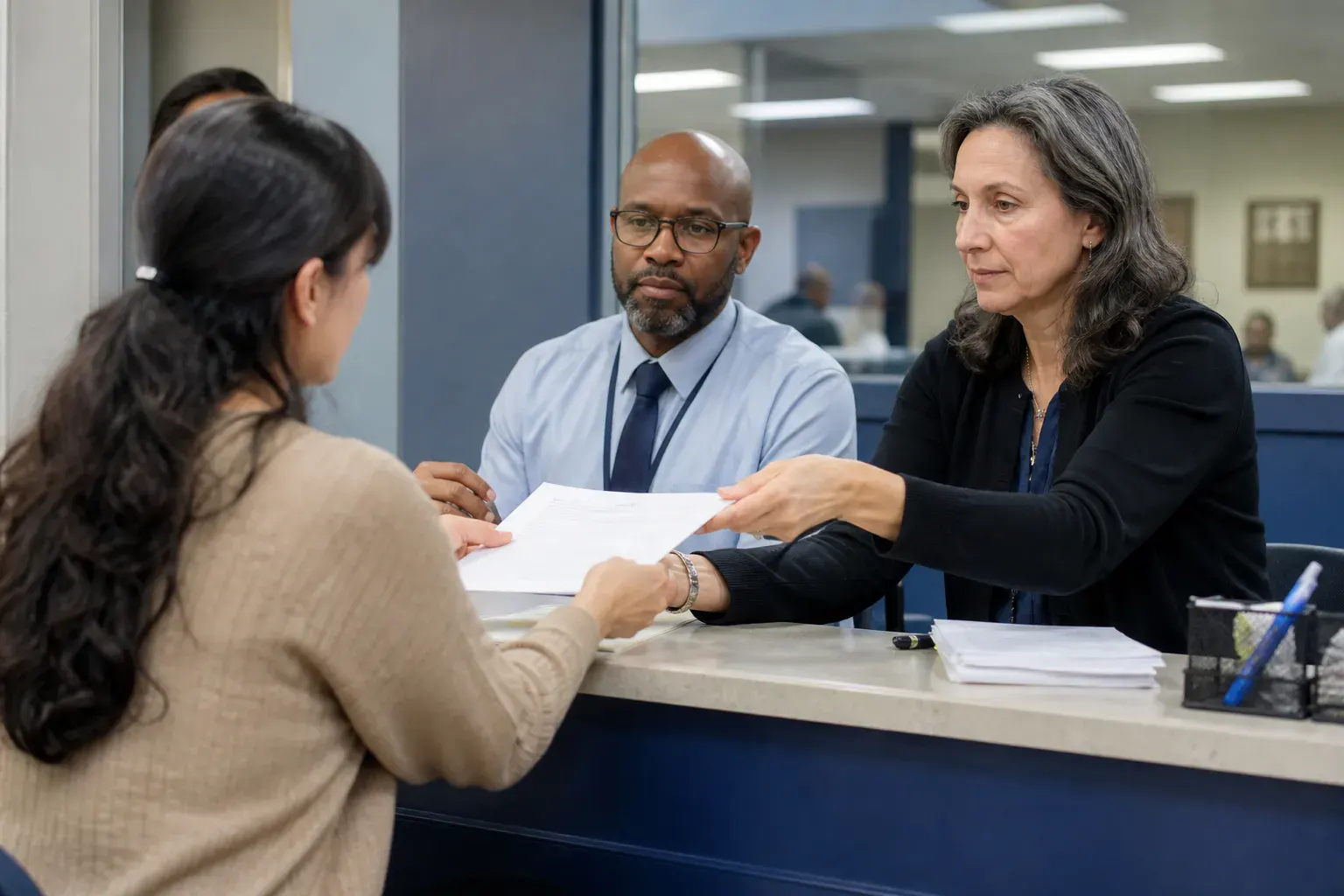
- Submit a sworn complaint to the department’s Internal Affairs Bureau (IAB) or Office of Professional Standards.
- File a dual complaint with your city’s Civilian Complaint Review Board (CCRB) or Police Commission. Civilian boards conduct independent investigations outside the police department hierarchy.
- Save your Internal Affairs Case Reference Number.

Step 4: Submitting a Civil Rights Complaint to the US DOJ
For severe civil rights violations or widespread department corruption:
- Go to civilrights.justice.gov.
- Select “Law Enforcement Misconduct / Excessive Force”.
- Provide a factual narrative of the incident, officer names, and witness contacts.
- DOJ Special Litigation attorneys investigate pattern-and-practice civil rights violations and can impose federal consent decrees or bring federal criminal charges under 18 U.S.C. § 242 (Deprivation of Rights Under Color of Law).

Step 5: Consulting a Section 1983 Civil Rights Attorney
To seek financial damages for constitutional injuries:
- Consult an accredited civil rights lawyer (search the National Police Accountability Project directory).
- File a civil action under 42 U.S. Code § 1983 in federal court.
- Attorneys handle Section 1983 claims on contingency ($0 upfront fees), recovering compensation for medical bills, pain and suffering, and punitive damages.
Evidence Preparation Checklist & Submission Roadmap
Record badge numbers, patrol unit IDs, witness contacts, and medical injury photos.
Mail certified preservation letter to City Attorney to freeze body-worn camera files.
File formal complaints with Internal Affairs and Civilian Complaint Review Board.
Submit tip to civilrights.justice.gov or file federal civil rights lawsuit with counsel.
Formal Sworn Police Misconduct Complaint & Evidence Preservation Notice Template
When filing a written complaint with Internal Affairs, the Civilian Oversight Board, and the City Attorney, use this formal format:
SENT VIA USPS CERTIFIED MAIL & HAND DELIVERY
CONFIDENTIAL: CITIZEN MISCONDUCT COMPLAINT
To: [Name of Chief of Police / Sheriff]
Internal Affairs Division / Office of Professional Standards
[Police Department / Sheriff’s Office Name]
[Department Street Address]
[City, State, ZIP]
Copy to: Office of the City Attorney / County Risk Management Division
RE: FORMAL COMPLAINT OF POLICE MISCONDUCT & DEMAND FOR EVIDENCE PRESERVATION
Complainant Name: [Your Full Legal Name]
Incident Date: [Date of Occurrence] | Incident Time: [Approximate Time, e.g., 10:45 PM]
Incident Location: [Specific Street Address / Intersection, City, State]
Involved Officer(s): [Officer Name(s), Badge Number(s), Patrol Vehicle Number(s)]
Police Incident / CAD Report #: [Incident or Citation Number if known]
Dear Chief of Police and Internal Affairs Investigators:
Please accept this formal written complaint regarding serious law enforcement misconduct, constitutional violations, and abuse of police authority committed against me on [Date] by officer(s) employed by your agency.
FACTUAL ITEMIZATION OF MISCONDUCT:
1. NATURE OF UNLAWFUL CONDUCT: [Specify violations: e.g., Unreasonable / Excessive Use of Force in violation of the Fourth Amendment; Unlawful Detainer / False Arrest; Unwarranted Search of Person / Vehicle without Probable Cause; Denial of Medical Attention; Retaliatory Threat for Recording in Public].
2. CHRONOLOGICAL SUMMARY: On [Date] at approximately [Time], I was [describe lawful activity, e.g., lawfully walking home / operating my vehicle]. Officer [Name/Badge #] approached and [detailed description of actions, statements, physical force applied].
3. INJURIES SUSTAINED & MEDICAL TREATMENT: As a direct result of this unlawful conduct, I sustained [describe injuries, e.g., contusions, lacerations, sprain] requiring medical treatment at [Name of Hospital/Clinic] on [Date].
4. INDEPENDENT WITNESSES: The following civilian witnesses observed the interaction: [Names and contact info of witnesses].
FORMAL EVIDENCE PRESERVATION DEMAND:
Pursuant to federal civil discovery mandates and state open government statutes, I demand that your department immediately issue an internal litigation hold to preserve all evidence relating to this incident, including but not limited to:
– Body-Worn Camera (BWC) footage from all officers present on scene;
– In-car dashboard camera audio and video recordings;
– Computer Aided Dispatch (CAD) call logs, 911 audio recordings, and mobile data terminal (MDT) transmissions;
– Use of force internal incident reports and supervisor reviews.
I request a written acknowledgment of this complaint with an official Internal Affairs Tracking Number within ten (10) business days.
Sincerely,
_________________________________________
[Your Signature]
[Your Printed Legal Name]
[Your Mailing Address]
Telephone: [Your Phone Number]
Email: [Your Email Address]



1 thought on “How to Report Police Misconduct: Your Rights, IAB & DOJ Guide”