
⚡ Quick Answer: How to Report a Roofing Scam
- Immediate Action / Statutory Deadline: Exercise your 3-day home solicitation cooling-off cancellation rights (16 CFR § 429) and notify your homeowners insurance carrier to freeze any direct contractor payouts.
- Primary Regulatory Agency: State Contractor Licensing Board & State Attorney General
- Statutory / Legal Remedy: Rescission of Assignment of Benefits (AOB), recovery against the contractor surety license bond, and civil damages up to Small Claims limits.
Storm-chasing roofing contractors frequently create transient digital websites and fake local addresses to collect insurance claim payouts before abandoning damaged properties. For forensic scam indicators, fake payment alerts, and digital fraud prevention checklists, review the full advisory on our sister publication: Unlicensed Contractor Digital Fronts & Phishing Verification →
⚖️ Facing Damages or Unreturned Funds Under $25,000?
Check your state small claims court dollar ceiling, statutes of limitations, and attorney representation rules.
How Do I Report Roofing Scam?
Reporting a roofing scam requires contacting your state licensing board and the attorney general’s consumer protection division. These agencies investigate unlicensed contractors who demand upfront payments without completing the agreed work. Formal complaints can trigger license revocations and potentially lead to criminal fraud charges.
- Gather Evidence: Organize the signed contract, payment checks, before-and-after photos, and written correspondence.
- File Your Report: Submit complaints to the state contractor licensing board and your local prosecutor’s office.
- Follow Up: Consult a consumer rights attorney to explore civil litigation options for recovering your money.
Severe hail storms, windstorms, and hurricanes routinely attract predatory out-of-state contractors and unlicensed door-to-door operators known as “storm chasers.” Knowing how to report a roofing scam is essential for protecting your property title, preventing home insurance fraud, and recovering stolen deposits. Unscrupulous roofers frequently pressure distressed homeowners into signing legally dangerous Assignment of Benefits (AOB) agreements, demand large cash down payments, create artificial roof damage, and abandon projects halfway through construction, leaving homes exposed to catastrophic water intrusion.
Contractor fraud violates state professional licensing statutes, municipal building codes, and insurance fraud laws. Holding a dishonest roofing contractor accountable requires immediate legal triage: revoking unauthorized power of attorney clauses, securing independent forensic roof inspections, filing disciplinary complaints with the state registrar of contractors, and making timely claims against mandatory surety bonds. This guide delivers the comprehensive protocol, legal checklists, and a formal pre-suit dispute notice template to safeguard your home.
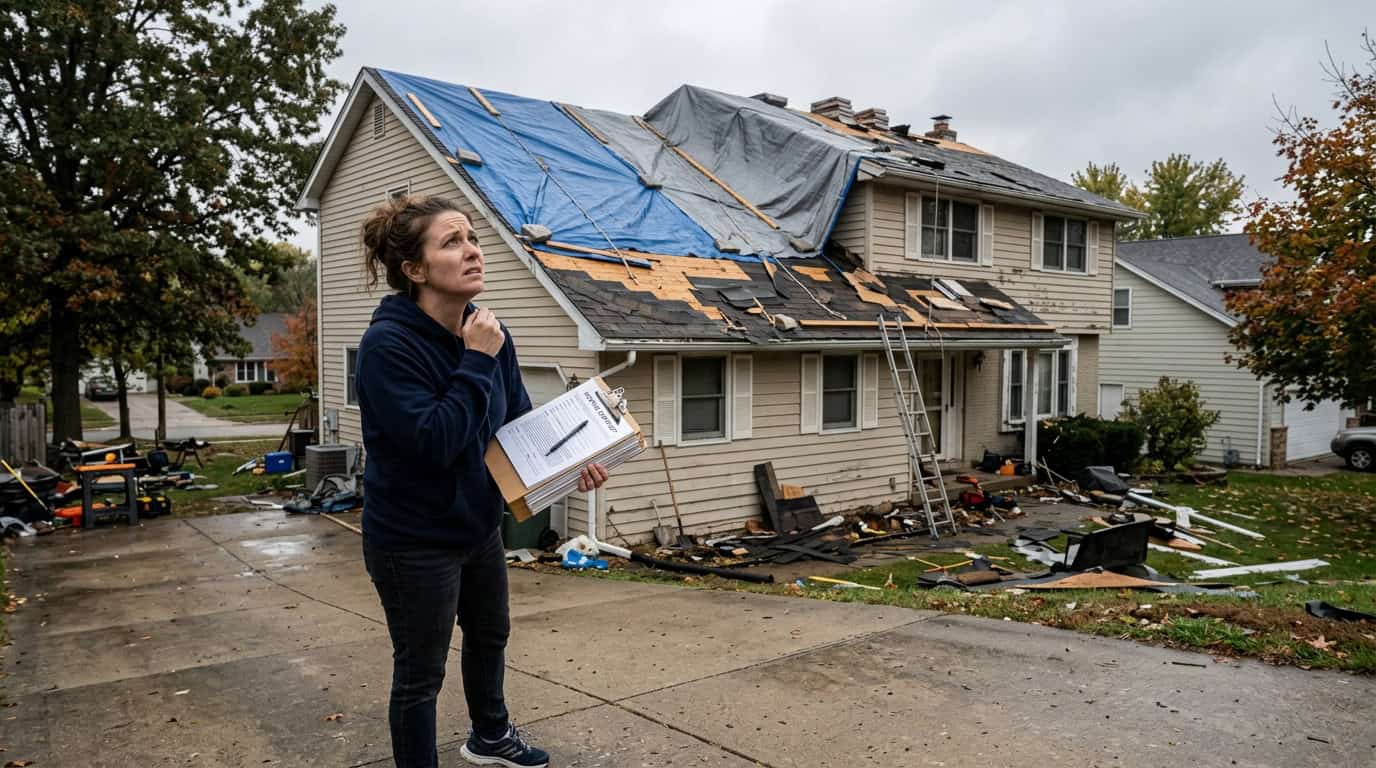
Identifying Common Roofing Scams and Storm-Chaser Deceptions
Roofing fraud encompasses a spectrum of deceptive commercial tactics designed to exploit insurance proceeds and homeowner vulnerability. Understanding the specific nature of the violation determines whether you should involve licensing boards, building inspectors, or the insurance commissioner.
Primary Categories of Roofing Fraud
- Predatory Assignment of Benefits (AOB) Traps: Door-to-door contractors offer a “free roof inspection” and ask the homeowner to sign an electronic pad described as an “inspection authorization.” In reality, the document is an irrevocable Assignment of Benefits granting the roofer exclusive rights to file claims, negotiate directly with the insurer, sue the carrier in the homeowner’s name, and pocket all proceeds without completing repairs.
- Manufactured & Exaggerated Hail Damage: Disreputable contractors climb onto roofs and intentionally crease shingles with coins, beat gutters with ball-peen hammers, or spin golf balls on flashing to simulate hail impacts. Presenting artificial damage to an insurer constitutes felony insurance fraud.
- Down Payment Deposit & Abandonment: Demanding 30% to 50% upfront deposits under the pretext of “ordering shingles” or “locking in supply chain pricing,” followed by complete cessation of contact, failure to pull municipal permits, and zero delivery of materials.
- Substandard & Non-Code Compliant Work: Installing thin, off-grade shingles over rotting decking without removing old layers, skipping required waterproof ice-and-water barrier underlayment, or failing to install code-mandated drip edges and ridge vents.
- Unpaid Subcontractor Mechanic’s Liens: The roofer takes the homeowner’s insurance payout but fails to pay local shingle suppliers or labor crews. Under state lien laws, the unpaid supplier can file a mechanic’s lien against the homeowner’s house, risking foreclosure even after the homeowner paid the roofer in full.
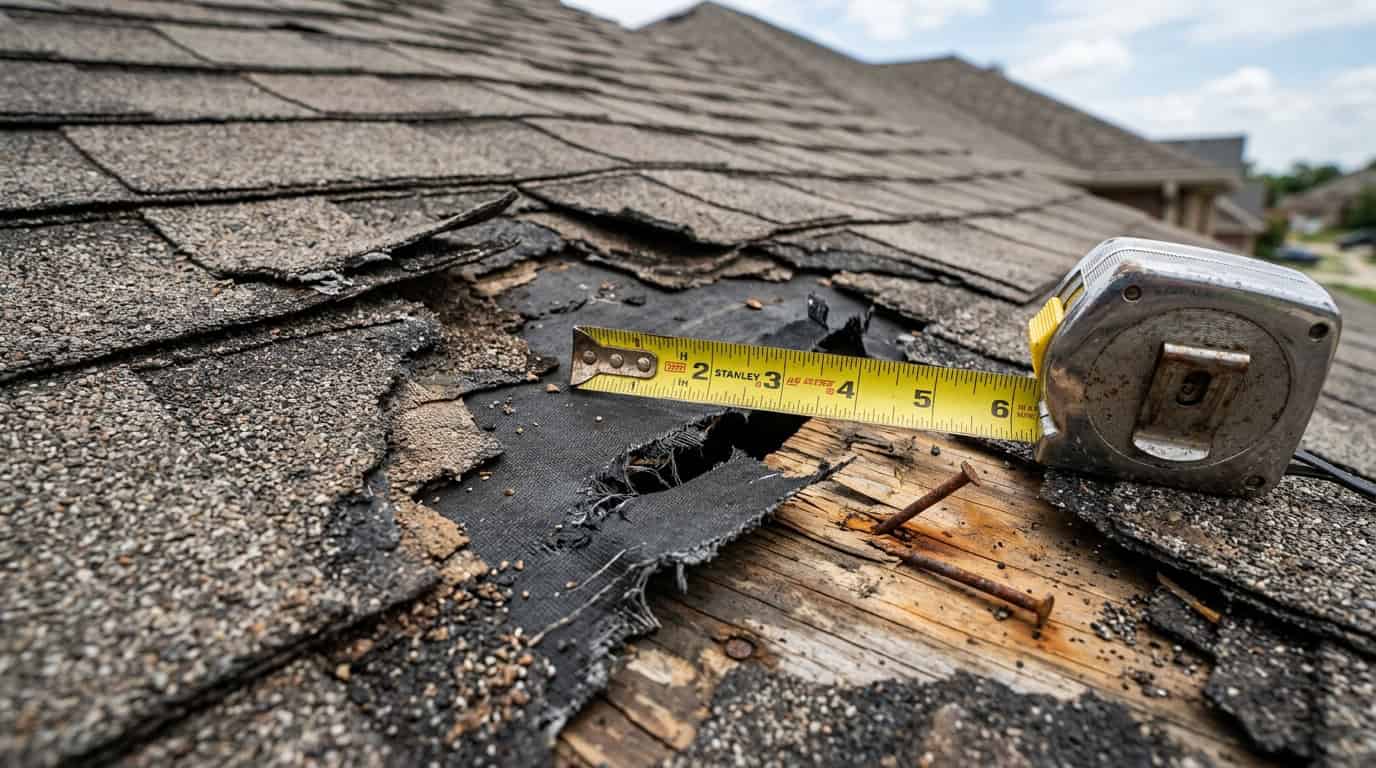
Emergency Triage: Steps to Take Within the First 72 Hours
If you suspect you have been deceived or signed an unauthorized agreement with a storm chaser, immediate intervention is necessary to prevent irreversible financial exposure:
- Exercise the Federal 3-Day Cooling-Off Rule: Under FTC Rule 16 CFR § 429 (and corresponding state Home Solicitation Sales Acts), any contract signed at your residence exceeding $25 provides an absolute, unconditional right of cancellation within three business days. Send the formal Notice of Cancellation immediately via certified mail before midnight of the third business day.
- Freeze Direct Payouts with Your Insurance Adjuster: Contact your homeowners insurance claims department immediately. Instruct them in writing NOT to release joint checks or two-party drafts naming the contractor, and revoke any verbal authorization allowing the contractor to negotiate on your behalf.
- Request Proof of Permit from Municipal Building Department: Visit your city or county building inspection office. Confirm whether the roofer pulled a valid building permit. Working on a roof without required municipal permits is a misdemeanor in most jurisdictions, empowering inspectors to issue a Stop Work order and levy fines.
- Demand Lien Waivers Immediately: If any materials have been delivered to your driveway or roof, demand conditional or unconditional lien releases from the roofer and material suppliers before remitting any further payments.
Emergency Storm-Chaser Roofing Triage Protocol
Day 1: Contract Rescission
Send statutory cancellation letter via Certified Mail invoking the 3-day home solicitation cooling-off rule.
Day 2: Insurance Lockdown
Revoke Assignment of Benefits (AOB) with your insurance carrier. Halt two-party checks and direct adjusters to inspect damage independently.
Day 3: Municipal Inspection
Contact municipal building department. Request official inspection and citations for unpermitted work or structural code violations.
Day 7+: Surety Bond Claim
File formal disciplinary complaint with State Contractor Licensing Board and submit direct claim against the roofer’s surety bond.
Regulatory Channels: Where to File Official Roofing Complaints
To halt contractor abuses and secure financial restitution, complaints must be submitted through multi-jurisdictional government channels.
1. State Contractor Licensing Board (Registrar of Contractors)
In states with contractor licensing programs (e.g., CSLB in California, ROC in Arizona, DBPR in Florida), the licensing board holds direct disciplinary authority over contractors. They can suspend licenses, order restitution, and administer state Contractor Recovery Funds that compensate defrauded homeowners up to statutory maximums ($15,000 to $50,000+ depending on state law).
- Verification Step: Look up the roofer’s license number on your state’s online registry. Check for active license status, workers’ compensation coverage, and existing public disciplinary citations.
- Complaint Process: File a formal verified complaint alleging abandonment, fraud, diversion of funds, or gross building code non-compliance.
2. State Insurance Commissioner Fraud Bureau
If the roofer attempted to file false claims, manufactured damage, waived your insurance deductible (illegal in almost all states under anti-deductible-rebating laws), or acted as an unlicensed public adjuster, report them directly to your State Insurance Department’s Criminal Fraud Division.
3. Municipal Building Department & Code Enforcement
Building inspectors possess direct police power to halt construction on your home immediately. If a contractor installed shingles over rotten plywood or failed to provide code-compliant fasteners, the building inspector will issue a formal Notice of Violation and Stop Work Order, providing airtight evidence for subsequent civil or bond recovery.

Statutory Notice of Defect, Rescission of AOB, and Surety Demand
To preserve your legal rights and establish statutory bad faith, send this formal notice via USPS Certified Mail with Return Receipt Requested to the roofing company and its surety bond carrier.
Roofing Contractor Myth vs. Legal Reality
Myth: “The roofer told me they can legally ‘absorb’ or ‘waive’ my insurance deductible so the roof costs me zero.”
Legal Reality: Waiving, rebating, or crediting a homeowner’s insurance deductible is an explicit crime in nearly all 50 states (e.g., Texas Insurance Code § 707.004, Florida Statute § 817.234). Contractors who offer to pay your deductible submit falsified invoices to the insurer, implicating the homeowner in insurance fraud.
Myth: “Because I signed their contract, I cannot hire another roofer until the first roofer releases me.”
Legal Reality: If a contractor fails to pull required permits, fails to start work within statutory deadlines (typically 30 days from deposit), or breaches core obligations, the contract is legally voidable. Once you provide formal written notice of termination for cause, you are free to mitigate damages and hire a licensed contractor.
Recovering Financial Losses Through Contractor Surety Bonds
In almost all states where contractors are regulated, roofers are legally mandated to file a commercial surety bond with the state licensing board before receiving a license. If a contractor takes your deposit and disappears, the surety company that backed the bond is financially liable to compensate you directly up to the bond limit (often $15,000 to $25,000).
To file a bond claim, obtain the contractor’s surety bond number and surety corporate name from the state licensing board registry. Submit a formal claim packet including: your written agreement, proof of payment (cancelled checks front and back), photographs of defective or incomplete work, independent inspection reports, and your certified pre-suit demand letter. The surety will assign a claims adjuster who investigates the breach. If the contractor refuses to cure the default, the surety pays the claim directly to the homeowner and pursues the contractor for reimbursement.
Before You Go: Citizen Protection Protocol
Protecting yourself against unlawful practices requires swift action, methodical documentation, and strict adherence to statutory deadlines. Preserve all original agreements, maintain contemporaneous call notes, and send formal correspondence via certified mail with return receipt requested.
HowToReport.org is an independent educational site — not a government agency. We link to official .gov and .org sources, but we cannot file a complaint for you or give legal advice. Read our full Legal Disclaimer & Safe Harbor →
Frequently Asked Questions
What is a “storm chaser” roofing scam?
Storm chasers are transient, out-of-state contractors who descend upon communities following severe hailstorms or hurricanes, going door-to-door offering “free roof replacements.” They pressure homeowners into signing an “Assignment of Benefits” (AOB) or exclusive contract, collect insurance advance checks, and either perform shoddy cosmetic patching or abandon the project entirely without paying suppliers.
Is it legal for a roofing contractor to pay or rebate my insurance deductible?
No. In most states (such as Texas Insurance Code § 707.002, Florida Statute § 817.234, and Colorado law), it is illegal for a contractor to promise to pay, waive, rebate, or absorb a homeowner’s property insurance deductible. Doing so constitutes insurance fraud, and insurers can require written proof of deductible payment before releasing final depreciation payments.
What statutory rights do homeowners have to cancel a roofing contract after an emergency?
Under emergency contractor statutes in many states, if an insurance carrier denies all or part of a roofing claim, the homeowner has a statutory right to cancel the repair contract without penalty within 3 to 5 business days of receiving the denial notice. Always verify contractor licensing with your state or city licensing board before signing.
Damages Under ,000? Check Your State Small Claims Limit
If administrative complaints fail to recover your financial losses, you can sue in local small claims court without expensive attorney fees. Select your state below for instant dollar limits and statutory deadlines:
Related Statutory Reporting Guides & Citizen Protections
Official step-by-step reporting protocols in this regulatory category.

Official sources
Use these official channels for your complaint — verify details on the agency site before you submit.
- State Contractor Licensing Board & State Attorney General — 1-877-382-4357 (Mon-Fri 9am-5pm ET)
- Official reporting portal
What happens next
- Most agencies send an acknowledgment or reference number — save it with your copies.
- Investigations vary by agency; complex cases can take weeks or months.
- If you do not hear back within the timeframe listed on the agency site, follow up in writing.
- Keep reporting to additional agencies if your issue crosses categories (for example, fraud plus billing).
1 thought on “How to Report a Roofing Scam: Storm Chasers & Fraud”