
⚡ Quick Answer: How to Report a Bad Contractor
- Direct Financial Bond Recovery: File a direct claim against the contractor’s mandatory Commercial Surety License Bond; bond underwriters investigate independently and disburse compensation without requiring a court judgment.
- State Regulatory Enforcement: Submit a formal verified complaint with your State Contractors License Board (CSLB); regulatory boards possess the legal authority to dispatch field investigators, levy fines, and revoke licenses.
- Unlicensed Contractor Remedies: If the contractor operated without a required license, file a criminal complaint with your local District Attorney’s Consumer Protection Unit and State Attorney General for unlawful contracting.
⚖️ Facing Damages or Unreturned Funds Under $25,000?
Check your state small claims court dollar ceiling, statutes of limitations, and attorney representation rules.
How Do I Report a Bad Contractor?
You can report a bad contractor by filing a complaint with your state’s licensing board and the attorney general’s office. If the contractor operated without a license, alert local code enforcement. File a report with the Better Business Bureau (BBB) to warn other consumers about their deceptive practices.
- Gather Evidence: Compile the signed contract, payment receipts, communication logs, and photos of the incomplete or shoddy work.
- File Your Report: Submit complaints to your state contractor licensing board, attorney general, and the BBB online portals.
- Follow Up: Consult a consumer protection attorney or file a small claims court lawsuit to recover your financial losses.

Home improvement projects are a massive financial investment, and falling victim to a negligent or scam contractor can be devastating. Whether they abandoned the job after taking a $20,000 deposit, performed shoddy work that violates building codes, or threatened to place a mechanic’s lien on your home, you are not powerless.
The construction industry is highly regulated at the state level. Licensed contractors are legally required to carry insurance and surety bonds specifically to protect consumers like you. However, to trigger these protections, you must stop arguing with the contractor over text message and begin formally documenting a breach of contract.
If a contractor walks off a job because you refused to pay for defective work, they may threaten to file a “Mechanic’s Lien” against your house. Do not panic, and do not pay the ransom. If they file a fraudulent lien, you can petition the court to have it “expunged” (removed), and the contractor can be ordered to pay your attorney’s fees.
Understanding Contractor Fraud: Warning Signs & Types
Contractor disputes generally fall into two categories: civil contract disputes (shoddy work, delays) and outright criminal fraud (taking a deposit and never returning).
The Bad Contractor Typology
1. Job Abandonment
The contractor takes a 50% deposit, does one day of demolition to make it look like they started, and then disappears for weeks citing “supply chain issues.”
2. Code Violations
The contractor performs work without pulling the required city permits, resulting in defective electrical or plumbing that poses a severe safety hazard to your family.
3. The “Bait and Switch”
They quote you $15,000 for a roof, but halfway through the job, they claim they found “unexpected rot” and demand an extra $10,000 in cash to finish the job.
4. Unpaid Subcontractors
You pay the general contractor in full, but they pocket the money instead of paying the plumber and electrician, who then threaten to sue you.
Where to Report: The Enforcement Jurisdiction Breakdown
To get your money back, you must attack the contractor’s license and their insurance simultaneously.
Contractor Enforcement Matrix
Step-by-Step Guide to Filing Your Complaint & Getting Refunds
To win a claim against a bond or a state board, you must prove you gave the contractor a reasonable opportunity to fix the issue before you fired them.

Step 1: Document Everything
Do not allow the contractor back on the property until you have taken dozens of timestamped photographs of the defective work. Print out all text messages and emails. Do not rely on verbal phone conversations—if it is not in writing, it did not happen.
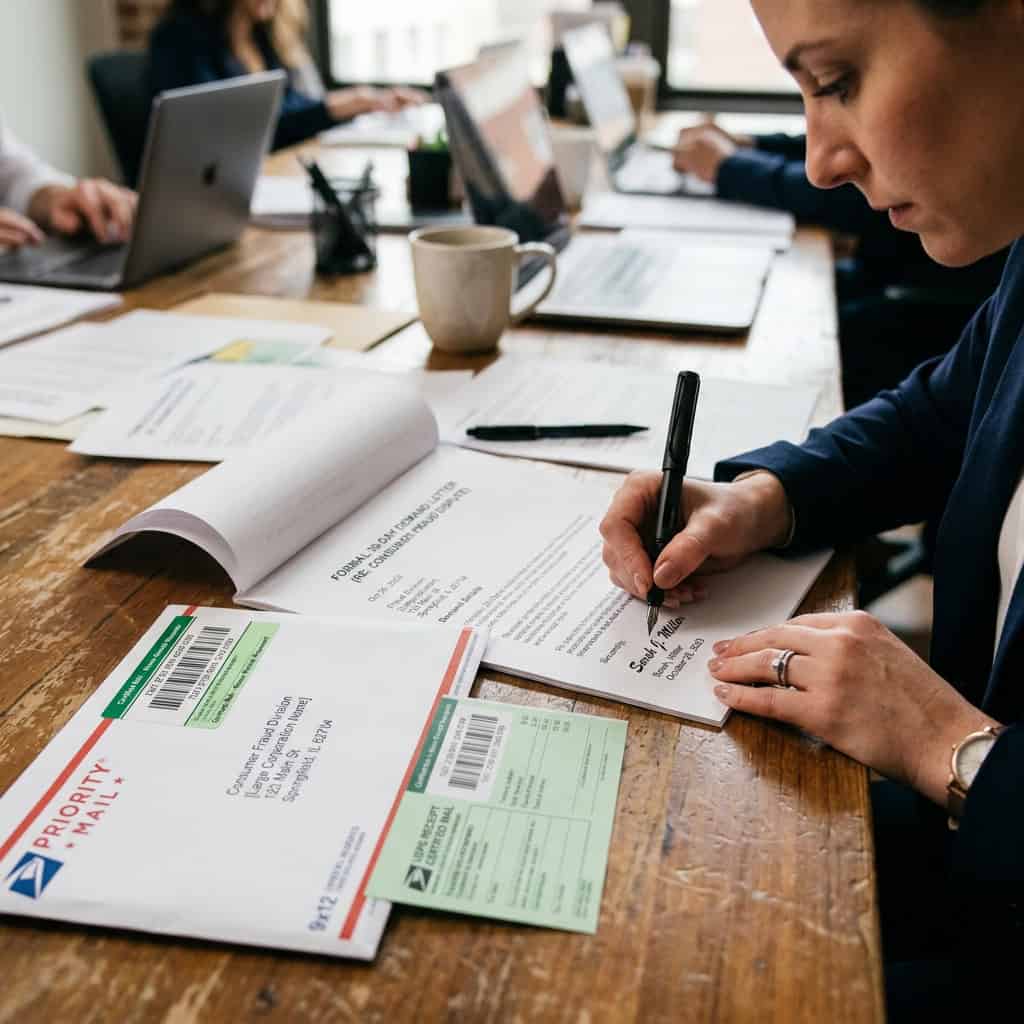
Step 2: Send a Formal Demand Letter
Before you can file a bond claim, you must formally demand that the contractor cure (fix) the defect or disgorge (refund) your money. Use the template provided below. Send it via Certified Mail. This creates a legal paper trail proving they ignored your demands.

Step 3: File the Surety Bond Claim
Look up the contractor on your State Licensing Board’s website. The database will list the name of their Surety Bond company and their bond number. Contact the bond company directly and state: “I need to file a claim against a contractor’s bond for breach of contract.” They will send you a claim form.
Step 4: File the State Board Complaint
Go to your State Licensing Board’s website and file a formal consumer complaint. Upload your contract, proof of payment, and the photos of the defective work. The board will assign an investigator. If the investigator finds code violations, they will order the contractor to fix it or face license suspension.
To establish a documented breach of contract, you must send this letter to the contractor. It proves to the bond company and the state that you acted reasonably and the contractor failed to perform.
[Date]
VIA CERTIFIED MAIL RETURN RECEIPT REQUESTED
To: [Contractor / Company Name]
License Number: [Insert License #]
Address: [Contractor’s Business Address]
RE: Breach of Contract / Demand for Immediate Cure or Refund at [Your Property Address]
Dear [Contractor’s Name],
I am writing to formally notify you that you are in material breach of our contract dated [Date of Contract] regarding the home improvement project at my residence.
Nature of the Breach:
[Describe the issue clearly, e.g., “You abandoned the project on October 1st after receiving a $10,000 deposit, and the framing work that was completed failed the city inspection on October 15th due to code violations.”]
This letter serves as your formal notice to cure. You have ten (10) days from the receipt of this letter to either:
1) Return to the property and correct the defective work to pass city inspection, or
2) Disgorge and refund the amount of [$ Amount] for work not performed.
If you fail to resolve this matter within the 10-day timeframe, I will immediately file a financial claim against your Surety Bond, file a formal complaint with the State Licensing Board seeking disciplinary action, and pursue civil litigation for all damages, including the cost to hire a replacement contractor.
I expect your prompt written response.
Sincerely,
[Your Printed Name]
[Your Signature]
[Your Phone Number]
Common Myths vs. Legal Realities About Bad Contractors
Contractors often bluff to intimidate homeowners into paying for terrible work. Know your rights.
4-Stage Contractor Dispute & Bond Recovery Roadmap
Stage 1: Documentation & Formal Notice to Cure
Photograph all incomplete or defective work, compile itemized receipts, and serve a formal 10-day Notice to Cure via USPS Certified Mail.
Stage 2: State Licensing Board Complaint Filing
Submit an administrative disciplinary complaint with the State Licensing Board, requesting dispatch of a field investigator and citation issuance.
Stage 3: Commercial Surety License Bond Claim
File a formal direct payout claim against the contractor’s mandatory surety license bond company, submitting repair estimates from third-party licensed trades.
Stage 4: Civil Recovery or State Guaranty Fund
If damages exceed bond limits, initiate small claims litigation or petition your state’s residential contractor recovery fund for uncollected balances.
Myth vs. Fact
“The contractor said he can charge whatever he wants for a deposit because we signed a contract.”
In many states, it is illegal for a contractor to demand more than 10% of the total project cost (or $1,000, whichever is less) as an upfront deposit before work begins. If they demanded 50% upfront, they already broke the law.
“I fired the contractor for terrible work, so I don’t have to pay him the rest of the contract.”
If you fire a contractor without giving them a formal “opportunity to cure” the defects, a judge may rule that you breached the contract, and you could be forced to pay them anyway. Always send the demand letter first.
Frequently Asked Questions
What if the contractor is unlicensed?
If you hired an unlicensed contractor, they do not have a surety bond to claim against, and the licensing board cannot revoke a license they do not have. However, in many states (like California), an unlicensed contractor cannot legally sue you for unpaid work, and you can sue them to recover 100% of the money you already paid them (disgorgement).
Can I sue their General Liability Insurance?
General Liability Insurance covers “accidents,” not “shoddy workmanship.” If the contractor accidentally drops a hammer and breaks your window, their insurance pays. If the contractor builds a crooked wall because they are bad at their job, their insurance will deny the claim. That is what the Surety Bond is for.
Should I hire a new contractor to fix the mess immediately?
Wait. If you hire a new contractor to tear out the bad work before the state investigator or the bond company evaluates it, you destroy the evidence. Get the work fully documented and appraised by a third party before demolition.
- National Association of State Contractors Licensing Agencies (NASCLA): Use this directory to find the specific reporting portal for your state’s licensing board. — NASCLA.org
- Federal Trade Commission (FTC): Guidance on spotting home improvement scams and navigating contract disputes. — FTC Home Improvement Scams
Before You Go: Citizen Protection Protocol
Protecting yourself against unlawful practices requires swift action, methodical documentation, and strict adherence to statutory deadlines. Preserve all original agreements, maintain contemporaneous call notes, and send formal correspondence via certified mail with return receipt requested.
HowToReport.org is an independent educational site — not a government agency. We link to official .gov and .org sources, but we cannot file a complaint for you or give legal advice. Read our full Legal Disclaimer & Safe Harbor →
Damages Under ,000? Check Your State Small Claims Limit
If administrative complaints fail to recover your financial losses, you can sue in local small claims court without expensive attorney fees. Select your state below for instant dollar limits and statutory deadlines:
Related Statutory Reporting Guides & Citizen Protections
Official step-by-step reporting protocols in this regulatory category.



Official sources
Use these official channels for your complaint — verify details on the agency site before you submit.
- State Contractor Licensing Board + BBB — 1-703-276-0100 (Online 24/7)
- Official reporting portal
What happens next
- Most agencies send an acknowledgment or reference number — save it with your copies.
- Investigations vary by agency; complex cases can take weeks or months.
- If you do not hear back within the timeframe listed on the agency site, follow up in writing.
- Keep reporting to additional agencies if your issue crosses categories (for example, fraud plus billing).