
To file a formal complaint against a hospital for medical negligence, medication errors, patient abuse, or premature discharge, submit a written grievance to the hospital Risk Management / Patient Relations department citing CMS regulation 42 CFR § 482.13. Simultaneously, request your complete unredacted medical records under federal HIPAA law (45 CFR § 164.524) before records are altered. File formal complaints with your State Department of Health (licensing), The Joint Commission (accreditation), and your state medical licensing board.
How Do I File a Hospital Complaint?
File a hospital complaint by contacting the facility’s designated patient advocate or grievance department first. Escalate serious safety concerns or severe quality of care issues to your state department of health and the Joint Commission. Regulators investigate unannounced to ensure medical facilities meet strict federal safety standards and licensing requirements.
- Gather Evidence: Request your complete medical records and document the names of involved staff, dates of treatment, and specific patient safety incidents.
- File Your Report: Submit a complaint through the Joint Commission website for safety issues or contact the state health department licensing board.
- Follow Up: Request a written response from the hospital grievance committee and consult a medical malpractice attorney for severe patient harm.
When a medical error or clinical neglect occurs in a hospital, patients and their families often feel completely overwhelmed. Hospitals are massive bureaucratic institutions protected by institutional risk management teams and corporate attorneys. However, every hospital participating in Medicare or Medicaid is governed by federal Conditions of Participation (CoPs) enforced by the Centers for Medicare & Medicaid Services (CMS).
Understanding the exact administrative channels—from filing a formal patient grievance and demanding your electronic medical records under HIPAA, to lodging complaints with state health inspectors and The Joint Commission—empowers you to break through institutional stonewalling and demand accountability.
Hospital Grievance & Negligence Escalation Protocol
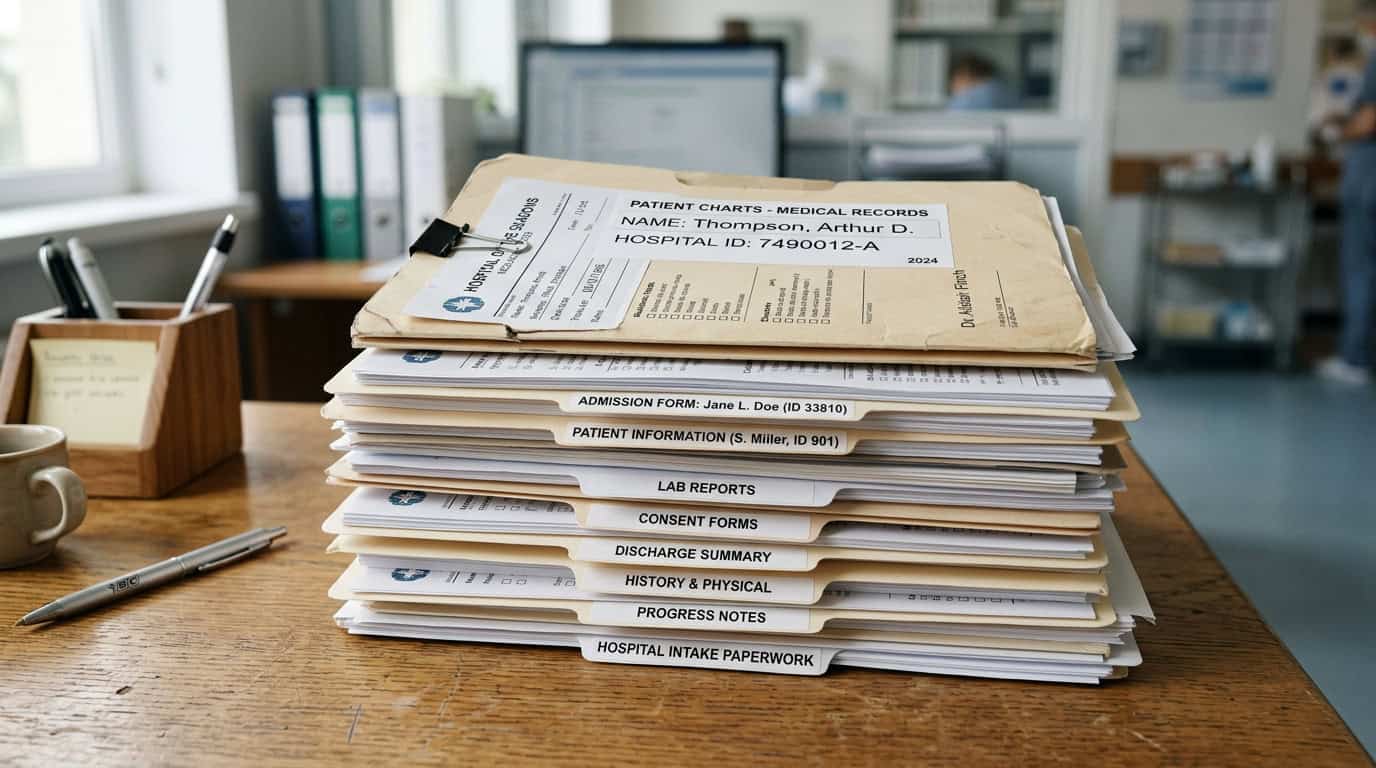
Step 1: Secure Your Complete Medical Records Immediately
The single most critical step in filing a hospital complaint is securing your complete medical records before filing a dispute. Under the Health Insurance Portability and Accountability Act (HIPAA), 45 CFR § 164.524, you have a strict federal right to inspect and receive a copy of your complete designated record set.
Do not just ask for the “discharge summary” on the patient portal. You must request the complete legal medical record, including:
- Physician and specialist consultation notes;
- Nursing flow sheets and hourly vital sign logs;
- Electronic Medication Administration Records (eMAR) showing exact timestamps of every dose;
- Anesthesia and intraoperative logs;
- Full-resolution diagnostic radiology images on CD/USB (DICOM format).
Under federal rules, the hospital cannot charge exorbitant per-page search fees for electronic records, and they must fulfill your request within 30 calendar days.
Step 2: File a Formal Written Grievance with Hospital Risk Management
Every accredited hospital must maintain a formal patient grievance process under CMS regulation 42 CFR § 482.13(a)(2). There is a critical legal distinction between a casual verbal “complaint” to a floor nurse and a formal written “Grievance” submitted to the hospital administration:
- A verbal complaint can be resolved informally by unit staff without formal tracking.
- A written grievance triggers federal mandates requiring the hospital governing body to conduct a formal clinical inquiry and issue a formal written finding letter detailing their investigation within a reasonable timeframe (typically 7 to 30 days).
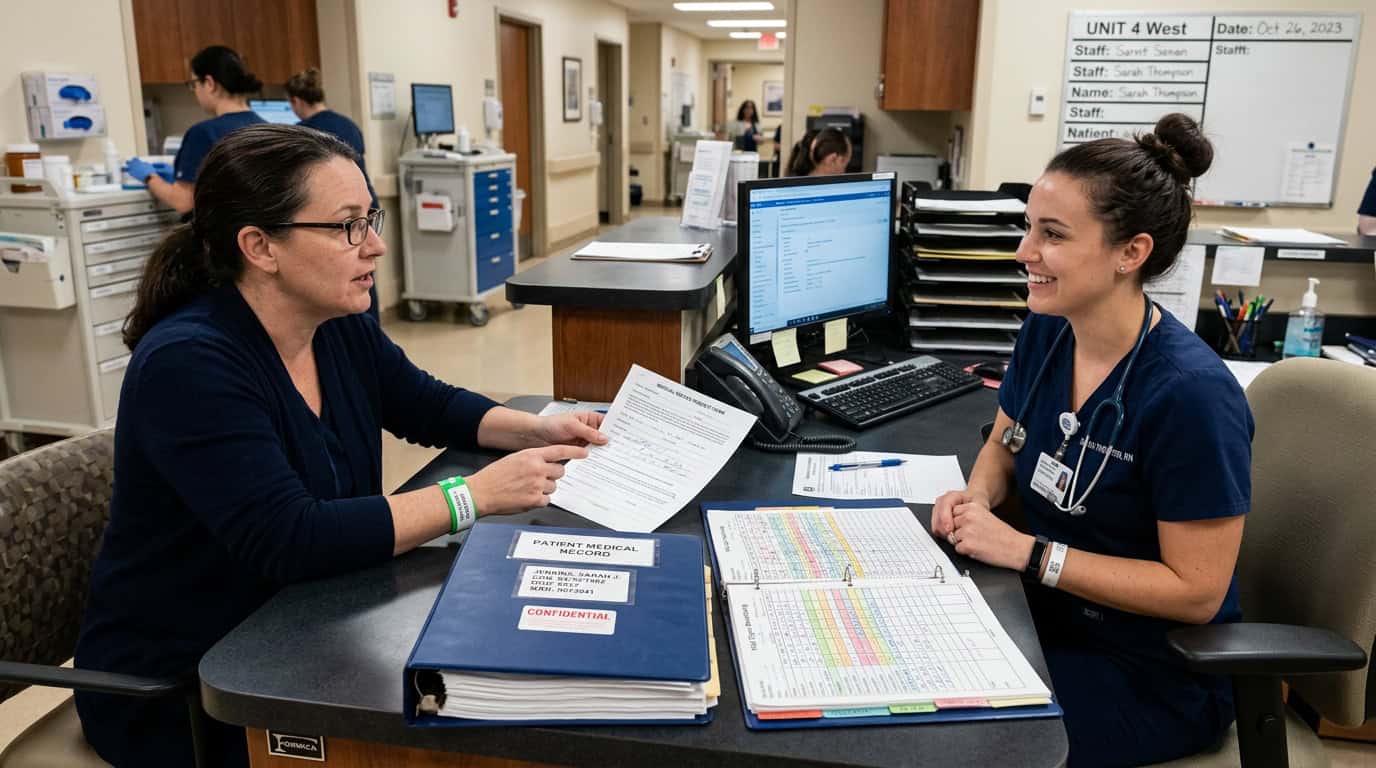
Formal Patient Grievance & Mandatory 30-Day Medical Records Access Request
Governing Legal Authority: 42 CFR § 482.13 & 45 CFR § 164.524
Instructions: Send via USPS Certified Mail with Return Receipt Requested. Retain the stamped green card and postal receipt to establish an unassailable evidentiary record for administrative complaints or civil claims.
SENT VIA USPS CERTIFIED MAIL — RETURN RECEIPT REQUESTED
Certified Mail Tracking No.: [Insert 20-Digit USPS Tracking #]
AND TRANSMITTED VIA SECURE PATIENT PORTAL / CERTIFIED FAX
To:
[Hospital Legal Name / Health System Name]
Attention: Risk Management & Patient Relations Department
[Hospital Physical Address]
[City, State, ZIP Code]
Copy To:
[State Department of Public Health — Health Facilities Licensing Division]
[State Medical Board / Board of Registered Nursing]
RE: FORMAL PATIENT GRIEVANCE, INVESTIGATION DEMAND, AND MANDATORY 30-DAY MEDICAL RECORDS ACCESS REQUEST (45 CFR § 164.524 — HIPAA & 42 CFR § 482.13 — CMS PATIENT RIGHTS)
Patient Name: [Patient Legal Name] | Date of Birth: [MM/DD/YYYY] | Medical Record / MRN: [MRN #]
Dates of Admission / Treatment: [Start Date] to [End Date] | Facility / Department: [Department Name]
To the Risk Management & Patient Advocacy Committee:
This letter constitutes a formal written patient grievance pursuant to Centers for Medicare & Medicaid Services (CMS) regulations under 42 CFR § 482.13(a)(2), as well as a mandatory statutory request for complete, unredacted medical records pursuant to the Health Insurance Portability and Accountability Act (HIPAA), 45 CFR § 164.524.
STATEMENT OF GRIEVANCE & ADVERSE SAFETY EVENT:
During the inpatient / outpatient admission on [Date(s)], patient [Patient Name] was subjected to serious deviations from acceptable medical standards of care, including:
1. Medication Administration / Surgical Errors: [Describe exact medication error, surgical complication, or missed diagnosis].
2. Discharge Against Medical Safety / Neglect: [Describe premature discharge without stabilization, failure to monitor vital signs, or refusal to treat].
3. Lack of Informed Consent: [Describe procedure performed without signed, informed consent].
STATUTORY HIPAA RECORDS DEMAND:
Pursuant to 45 CFR § 164.524, demand is hereby made for complete, unredacted copies of all medical records associated with the above-referenced admission, including but not limited to: physician orders, nursing progress notes, operative reports, anesthesia records, medication administration records (eMAR), lab results, radiology imaging DICOM files, and internal incident tracking numbers. Under federal law, these records must be provided within thirty (30) calendar days.
REQUIRED HOSPITAL RESPONSE:
Under CMS Condition of Participation 42 CFR § 482.13, this facility is required to investigate this grievance, document the findings, and provide a comprehensive written response within a reasonable timeframe (typically not to exceed 30 days), detailing:
– The steps taken to investigate the grievance;
– The names of the hospital committee members reviewing the care;
– The clinical findings and corrective safety actions implemented.
Failure to provide records or respond will result in immediate regulatory complaints to the State Department of Public Health, The Joint Commission (TJC), and the HHS Office for Civil Rights.
Sincerely,
____________________________________________
[Patient Signature or Authorized Healthcare Proxy Signature]
[Printed Name of Signer / Legal Relationship]
[Your Address]
[Your Telephone Number]
⚖️ Facing Damages or Unreturned Funds Under $25,000?
Check your state small claims court dollar ceiling, statutes of limitations, and attorney representation rules.
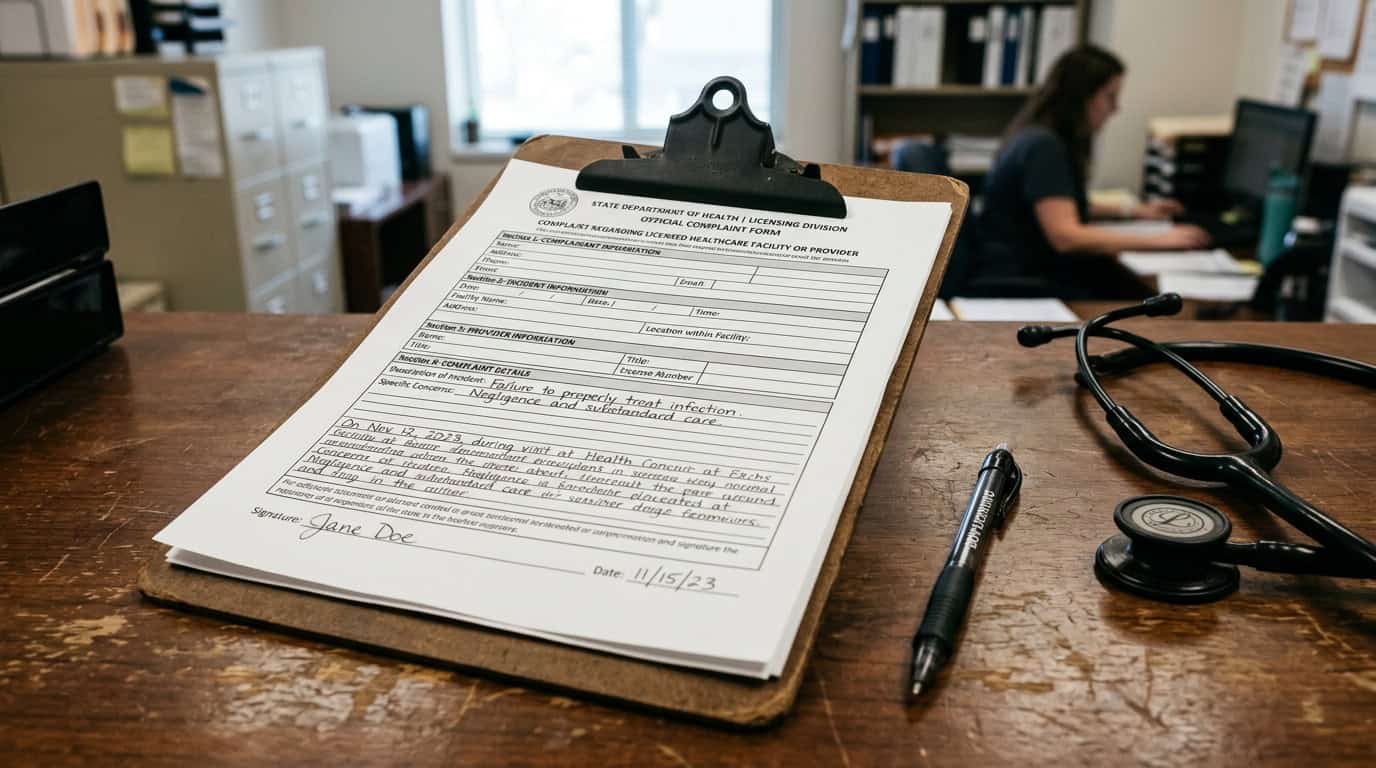
Step 3: File an Official Complaint with the State Health Department
The agency with the most direct power to sanction a hospital is your State Department of Public Health (Health Facilities Licensing & Certification Division). State health departments act as the enforcement arm for CMS.
When you file a complaint with the state health department:
- The state evaluates whether the incident represents a violation of state licensing codes or federal Conditions of Participation.
- If substantiated, the state dispatches a team of unannounced, on-site investigative nurses to inspect the hospital, interview clinical staff, and review audit logs.
- If violations are found, the state issues a public Statement of Deficiencies (Form CMS-2567), forcing the hospital to submit a Plan of Correction or face termination of their Medicare billing privileges.
Hospital Regulatory Bodies & Complaint Routing Channels
| Regulatory Body | Scope of Jurisdiction | Enforcement Remedies | Filing Mechanism |
|---|---|---|---|
| State Dept. of Public Health (DPH) | Hospital facility licensing & safety violations | Unannounced on-site inspections, CMS Form 2567 deficiencies, license revocation | State DPH Healthcare Facility Complaint Unit |
| The Joint Commission (TJC) | Hospital national accreditation & sentinel safety events | Accreditation probation, conditional accreditation status | jointcommission.org / Report a Safety Event |
| CMS Beneficiary & Family Centered QIO | Medicare/Medicaid quality of care & premature discharge | Immediate medical review, hospital stay extensions, billing freeze | BFCC-QIO (Kepro / Livanta regional contractor) |
| State Medical Board / Nursing Board | Individual physician and nurse license discipline | License suspension, mandatory clinical probation, public reprimand | State Medical Board Online Complaint Portal |
Step 4: Report Sentinel Events to The Joint Commission (TJC)
Over 80% of U.S. hospitals are accredited by The Joint Commission (TJC). TJC maintains an Office of Quality and Patient Safety where patients can report serious adverse safety events. While TJC does not adjudicate individual monetary claims, submitting a report triggers an institutional safety review that becomes part of the hospital permanent national accreditation file.
Hospital Complaint Common Misconceptions
Frequently Asked Questions
What is EMTALA and how does it protect emergency room patients?
The Emergency Medical Treatment and Labor Act (EMTALA) requires any hospital accepting Medicare to provide an appropriate medical screening examination (MSE) and stabilizing treatment to any individual who arrives at an emergency department, regardless of their insurance status, ability to pay, or prior grievance history. “Patient dumping” carries severe federal fines up to $120,000+ per violation.
How do I appeal a premature discharge if Medicare is paying?
If a hospital attempts to discharge you while you are unstable, invoke your immediate right to an Expedited Quality Improvement Organization (QIO) Appeal. Inform the discharge planner in writing before midnight that you are appealing. Your discharge is immediately frozen and Medicare continues coverage while an independent physician reviews your medical chart within 24 to 48 hours.
What is the statute of limitations for medical negligence in civil court?
Medical malpractice statutes of limitations vary widely by state—ranging from 1 year to 3 years from the date of injury (or the date the injury was reasonably discovered). Because malpractice claims require complex pre-suit notices and affidavits of merit from medical experts, consult a licensed attorney well in advance of statutory deadlines.
Official Regulatory Authorities & Governing Statutes
- CMS Conditions of Participation (CoPs) for Hospitals (42 CFR Part 482)
- The Joint Commission (TJC) Office of Quality and Patient Safety
- HHS Office for Civil Rights (HIPAA Enforcement Portal)
- State Departments of Public Health & Healthcare Facility Licensing Divisions
Before You Go: Citizen Protection Protocol
Protecting yourself against unlawful practices requires swift action, methodical documentation, and strict adherence to statutory deadlines. Preserve all original agreements, maintain contemporaneous call notes, and send formal correspondence via certified mail with return receipt requested.
HowToReport.org is an independent educational site — not a government agency. We link to official .gov and .org sources, but we cannot file a complaint for you or give legal advice. Read our full Legal Disclaimer & Safe Harbor →
Related Statutory Reporting Guides & Citizen Protections
Official step-by-step reporting protocols in this regulatory category.



Official sources
Use these official channels for your complaint — verify details on the agency site before you submit.
- The Joint Commission — 1-800-994-6610 (Online 24/7)
- Official reporting portal
What happens next
- Most agencies send an acknowledgment or reference number — save it with your copies.
- Investigations vary by agency; complex cases can take weeks or months.
- If you do not hear back within the timeframe listed on the agency site, follow up in writing.
- Keep reporting to additional agencies if your issue crosses categories (for example, fraud plus billing).