⚡ Quick Answer: How to Report Reckless Driving
- Immediate Action / Statutory Deadline: In active road emergencies, extreme speeding, or suspected DUI, immediately call 911 or dial your State Highway Patrol emergency shortcut (*HP, #77, or *55); relay vehicle make, model, color, license plate, and mile marker.
- Primary Regulatory Agency: State Highway Patrol / State Police and municipal traffic enforcement division; commercial vehicle safety violations reportable to FMCSA at 1-888-DOT-SAFT.
- Statutory / Legal Remedy: Traffic stop, driver arrest for misdemeanor/felony reckless driving, license revocation, and commercial carrier safety rating downgrades.
How Do I Report Reckless Driving?
You can report reckless driving directly to your local police department or highway patrol through their non-emergency phone number. If the incident involves an immediate threat to public safety, such as extreme speeding or suspected drunk driving, call 911 immediately and provide the vehicle’s location and direction of travel.
- Gather Evidence: Note the vehicle make, model, color, license plate number, and a description of the driver if possible.
- File Your Report: Call the local police non-emergency line or 911 for emergencies, providing exact location details.
- Follow Up: Provide your dashcam footage to the investigating officer and request a copy of the police report.
Learning how to report reckless driving is a vital civic responsibility that saves lives, prevents fatal highway pileups, and takes dangerous, intoxicated, or aggressive motorists off public roads. The National Highway Traffic Safety Administration (NHTSA) attributes over 66% of traffic fatalities to aggressive driving behaviors, including extreme speeding, tailgating, erratic lane splitting, and road rage confrontations. Understanding how to relay accurate vehicle identifiers from a safe distance, utilize state highway patrol dispatch lines, and submit dashcam video footage ensures law enforcement intercepts offenders before tragedy strikes.

Your safety is paramount. Do not speed up to follow the violator, flash your high beams, or honk aggressively. Maintain a safe following distance of several hundred feet, use hands-free Bluetooth calling to dial 911, and let trained highway patrol units conduct the traffic stop.
Reckless Driving Classification: Identifying Threat Levels
Classify the dangerous driving behavior to help 911 dispatchers prioritize squad car deployment.
Drifting across lanes, driving on the shoulder, erratic braking, straddling center lines, or driving without headlights at night. Priority 1: Immediate 911.
Intentional brake-checking, cutting off vehicles, brandishing objects/weapons, making threatening gestures, or attempting to run cars off the road.
Multiple vehicles weaving through dense traffic at 20+ mph over limits, doing donuts in intersections, or running red lights.
Where to Report: Emergency & Non-Emergency Routing Matrix
Determine whether your report requires real-time 911 emergency dispatch or post-incident non-emergency investigation.
- Use When: DUI in progress, active road rage, high-speed street racing.
- Action: Dispatches nearest patrol cruiser to intercept immediately.
- Outcome: Field sobriety tests, felony reckless driving arrests.
- Shortcuts:
#77(VA, MD),*55(MO),*HP(FL, NC),#999(CO). - Focus: Interstate highways, state freeways, turnpikes.
- Outcome: Routes directly to state police traffic dispatch centers.
- Use When: Past incident with dashcam footage, or commercial fleet trucks.
- Channels: Local Police Non-Emergency / “How’s My Driving— bumper numbers.
- Outcome: Warning letters to vehicle owners; corporate driver reprimands.
Step-by-Step Guide to Reporting Reckless Driving
Follow these 5 steps to safely record vehicle details, alert authorities, and submit digital proof.
Step 1: Safely Noting Vehicle Identifiers
Memorize or dictate the key vehicle descriptors:
- License Plate: State and plate number (the single most important identifier).
- Vehicle Description: Make, model, body style (sedan, SUV, pickup), color, and distinguishing features (tinted windows, roof rack, bumper stickers, body damage).
- Location & Direction: Highway number or street name, nearest mile marker or cross street, and direction of travel (e.g., “Northbound I-95 passing Exit 42”).
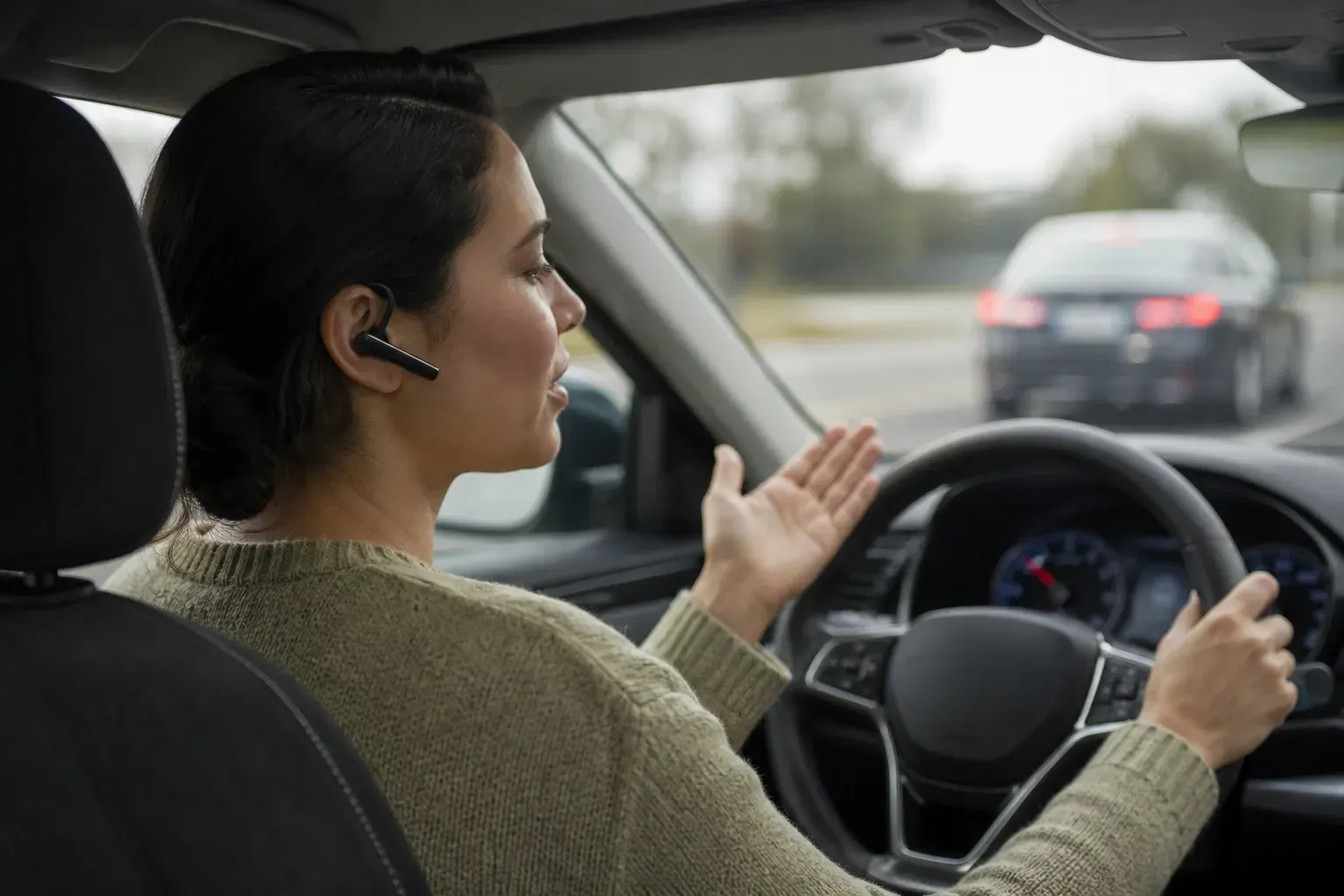
Step 2: Calling 911 Hands-Free via Bluetooth or Siri / Google Assistant
Make the call safely without taking your hands off the steering wheel:
- Use voice activation: “Hey Siri, call 911” or “OK Google, call 911”.
- Tell the dispatcher calmly: “I am calling to report an active reckless / impaired driver endangering traffic on [Highway Name] heading [Direction].”
- Describe specific dangerous actions (e.g., “The driver is swerving across 3 lanes at 90 mph and almost collided with a tanker truck.”).
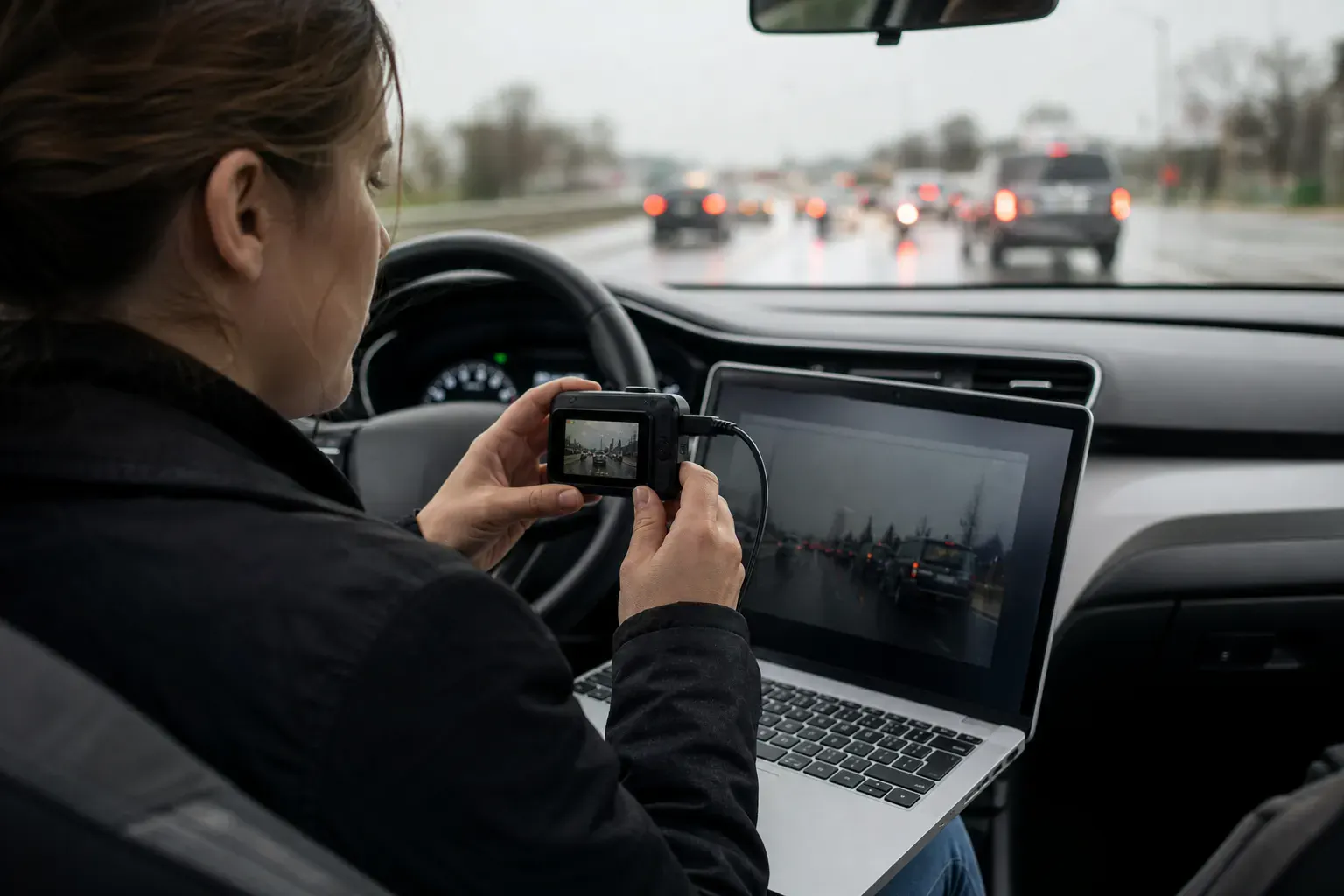
Step 3: Preserving Dashcam Video Footage
Digital video provides indisputable evidence for criminal traffic citations:
- Press the Emergency Event Lock Button on your dashcam to prevent the video clip from being overwritten.
- Export the video file to your computer or phone. Verify that the footage clearly captures the violator’s license plate, speed relative to traffic, and erratic lane changes.

Step 4: Reporting Commercial Fleet Trucks (DOT / “How’s My Driving—)
If the reckless driver is operating a commercial semi-truck, delivery van, or contractor vehicle:
- Note the company name, truck number, and USDOT Number printed on the driver’s door.
- Call the 1-800 “How’s My Driving— safety hotline printed on the rear bumper.
- Submit a formal complaint to the Federal Motor Carrier Safety Administration (FMCSA) National Consumer Complaint Database at
nccdb.fmcsa.dot.gov. Commercial carriers face severe federal safety rating penalties for dangerous driving.
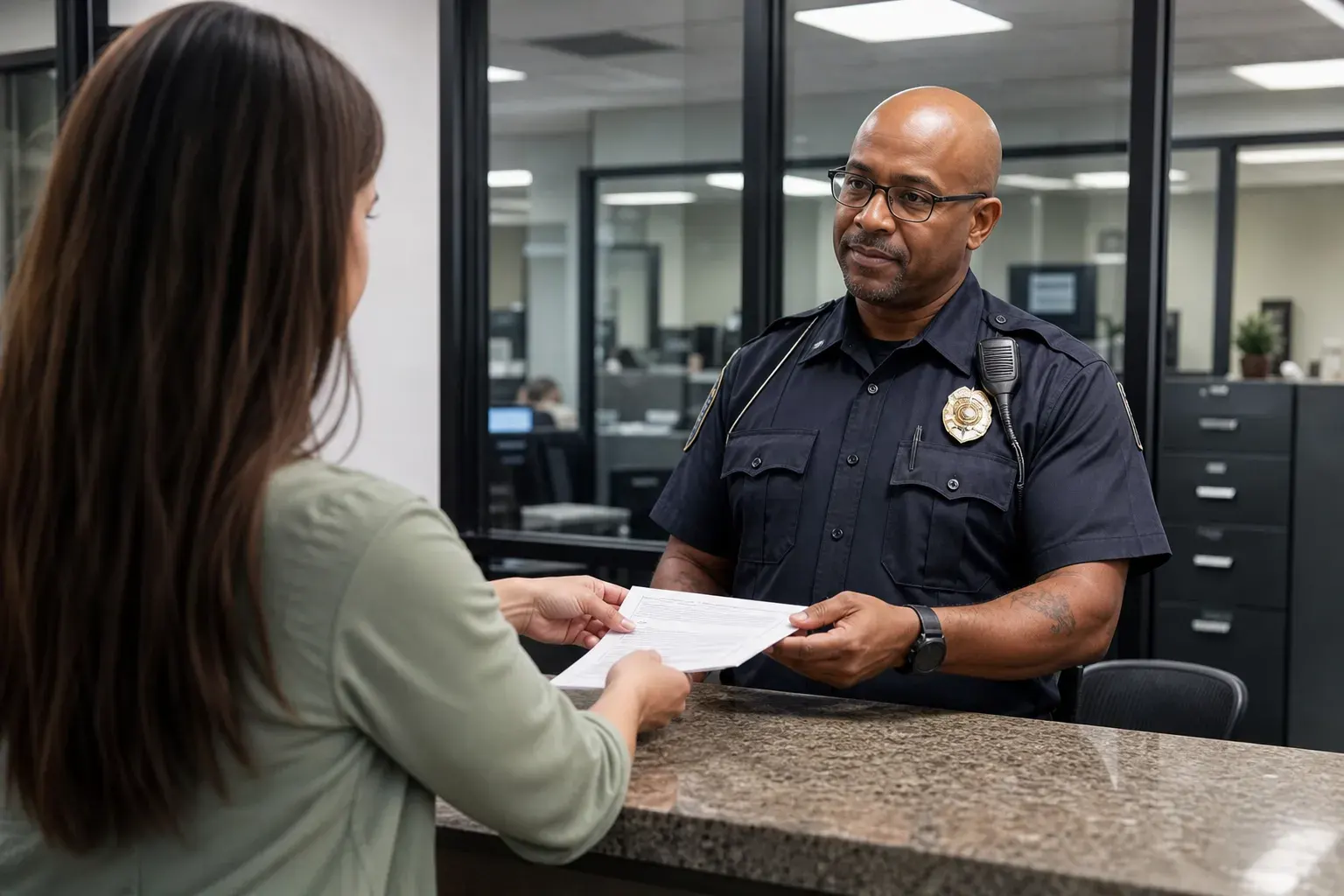
Step 5: Submitting a Written Citizen Traffic Report Post-Incident
For non-emergency incidents that have already concluded:
- Contact your local police department or state highway patrol post-incident traffic division.
- Submit an online Citizen Traffic Incident Report and upload your dashcam footage.
- Police traffic divisions use these reports to dispatch targeted patrol units to high-risk corridors and send official warning letters to registered vehicle owners.
Evidence Preparation Checklist & Submission Roadmap
Safely note license plate state/number, make, model, color, highway route, and heading.
Dial 911 via Bluetooth voice commands to dispatch intercepting highway patrol cruisers.
Lock and export video clips showing erratic lane changes and aggressive maneuvers.
Submit post-incident reports to local traffic units or FMCSA for fleet commercial trucks.
Formal Written Citizen Traffic Incident & Aggressive Driving Report Template
When filing a post-incident traffic safety report or submitting dashcam video to a police traffic division, use this format:
TO: Police Department / Highway Patrol / Traffic Enforcement Division
DATE: [Enter Date]
RE: Citizen Report of Aggressive / Reckless Driving pursuant to State Vehicle Code
Incident Date & Time: [MM/DD/YYYY at HH:MM AM/PM]
Incident Location: [Exact Highway, Direction, & Nearest Mile Marker / Cross Street]
Dear Traffic Enforcement Commander,
I am writing to report a severe reckless driving incident that endangered motorists on [Highway / Road Name].
1. Suspect Vehicle Information:
– License Plate: [State & Plate Number]
– Vehicle Make / Model / Year / Color: [e.g., ‘Black Ford F-150 Pickup’]
– Distinguishing Features: [e.g., ‘Tinted windows, commercial logo on tailgate’]
2. Factual Description of Dangerous Driving Behavior:
– [e.g., ‘Vehicle was observed aggressively tailgating within 3 feet at 85+ mph, brake-checking vehicles, and passing on the right shoulder.’]
– Road Conditions: [e.g., ‘Heavy commuter traffic, wet asphalt’].
3. Attached Video Evidence:
Attached is high-resolution dashcam video footage documenting the vehicle’s speed and aggressive maneuvers.
Sincerely,
[Your Signature & Full Name]
[Phone Number & Email Address]
Common Myths vs. Legal Realities About Reckless Driving
Fact: Law enforcement explicitly encourages 911 calls for active reckless, impaired, or road-rage drivers to prevent crashes.
Unlike standard speeding tickets, reckless driving involves criminal charges, driver’s license suspension, and potential jail time.
Fact: Chasing a violator escalates road rage and puts your own life at risk. Never speed up or engage.
Corporate risk managers reprimand or terminate drivers based on citizen calls to “How’s My Driving— bumper numbers.
Frequently Asked Questions
What is the legal difference between careless driving and reckless driving?
Careless driving involves simple negligence, such as momentary inattention or failing to signal (usually a civil infraction fine). Reckless driving requires a willful and wanton disregard for public safety (e.g., extreme speeding, weaving across double yellow lines) and is a criminal misdemeanor.
Can police issue a ticket based solely on dashcam video?
Yes. If your dashcam video clearly shows the vehicle’s license plate, driver’s face, and unambiguous reckless maneuvers, police officers can issue a criminal citation or submit the case to the city attorney or district attorney for criminal misdemeanor prosecution.
What should I do if an aggressive road-rage driver follows me?
Never drive home or pull into a dark parking lot. Keep your doors locked, stay on main roads, call 911 immediately, and drive directly to the nearest well-lit public police station, fire station, or busy hospital emergency entrance.
- National Highway Traffic Safety Administration (NHTSA): Aggressive Driving Prevention — NHTSA Aggressive Driving
- Federal Motor Carrier Safety Administration (FMCSA): Report Commercial Truck Safety Violations — FMCSA Consumer Safety Portal
- Governors Highway Safety Association (GHSA): State Traffic Laws Directory — GHSA.org
Before You Go: Citizen Protection Protocol
Protecting yourself against unlawful practices requires swift action, methodical documentation, and strict adherence to statutory deadlines. Preserve all original agreements, maintain contemporaneous call notes, and send formal correspondence via certified mail with return receipt requested.
⚖️ Facing Financial Damages or Statutory Violations Under $25,000?
Look up your state small claims court limits, statutory damages remedies, and official regulatory agencies.
HowToReport.org is an independent educational site — not a government agency. We link to official .gov and .org sources, but we cannot file a complaint for you or give legal advice. Read our full Legal Disclaimer & Safe Harbor →
Damages Under ,000? Check Your State Small Claims Limit
If administrative complaints fail to recover your financial losses, you can sue in local small claims court without expensive attorney fees. Select your state below for instant dollar limits and statutory deadlines:
Related Statutory Reporting Guides & Citizen Protections
Official step-by-step reporting protocols in this regulatory category.


Official sources
Use these official channels for your complaint — verify details on the agency site before you submit.
- Local Police Non-Emergency + 911 — 911 or 311 (911 available 24/7)
- Official reporting portal
What happens next
- Most agencies send an acknowledgment or reference number — save it with your copies.
- Investigations vary by agency; complex cases can take weeks or months.
- If you do not hear back within the timeframe listed on the agency site, follow up in writing.
- Keep reporting to additional agencies if your issue crosses categories (for example, fraud plus billing).