
To report illegal dumping of construction debris, scrap tires, or household waste on public property, submit a service request via your city’s 311 portal (or call 311) . For hazardous chemicals, leaking oil barrels, or industrial waste dumped in waterways, immediately call the EPA National Response Center (NRC) at 1-800-424-8802 or your local County Sheriff Environmental Crimes Task Force .
How Do I Report Illegal Dumping?
Reporting illegal dumping involves contacting your local environmental protection agency or municipal public works department. Prompt notification ensures hazardous materials are removed quickly before contaminating local soil and water sources. Authorities can use your provided details to fine offenders and deter future environmental crimes.
- Gather Evidence: Take photos of the dumped materials and record license plates if you witness the act.
- File Your Report: Submit details through your city’s 311 system or state environmental agency website.
- Follow Up: Check the area later to verify the municipality cleared the debris properly.
Learning how to report illegal dumping protects public health, preserves property values, and prevents toxic groundwater contamination. “Midnight dumping” of commercial demolition debris, discarded tires, industrial solvents, and appliances creates severe fire hazards and vector breeding grounds for rats and mosquitoes. Under federal statutes like the Resource Conservation and Recovery Act (RCRA) and state environmental penal codes, illegal dumping is a serious criminal offense carrying thousands of dollars in mandatory fines, vehicle impoundment, and jail sentences. Understanding how to capture license plate evidence safely, file 311 municipal tickets, and trigger environmental sheriff investigations ensures polluters pay for full site cleanup.
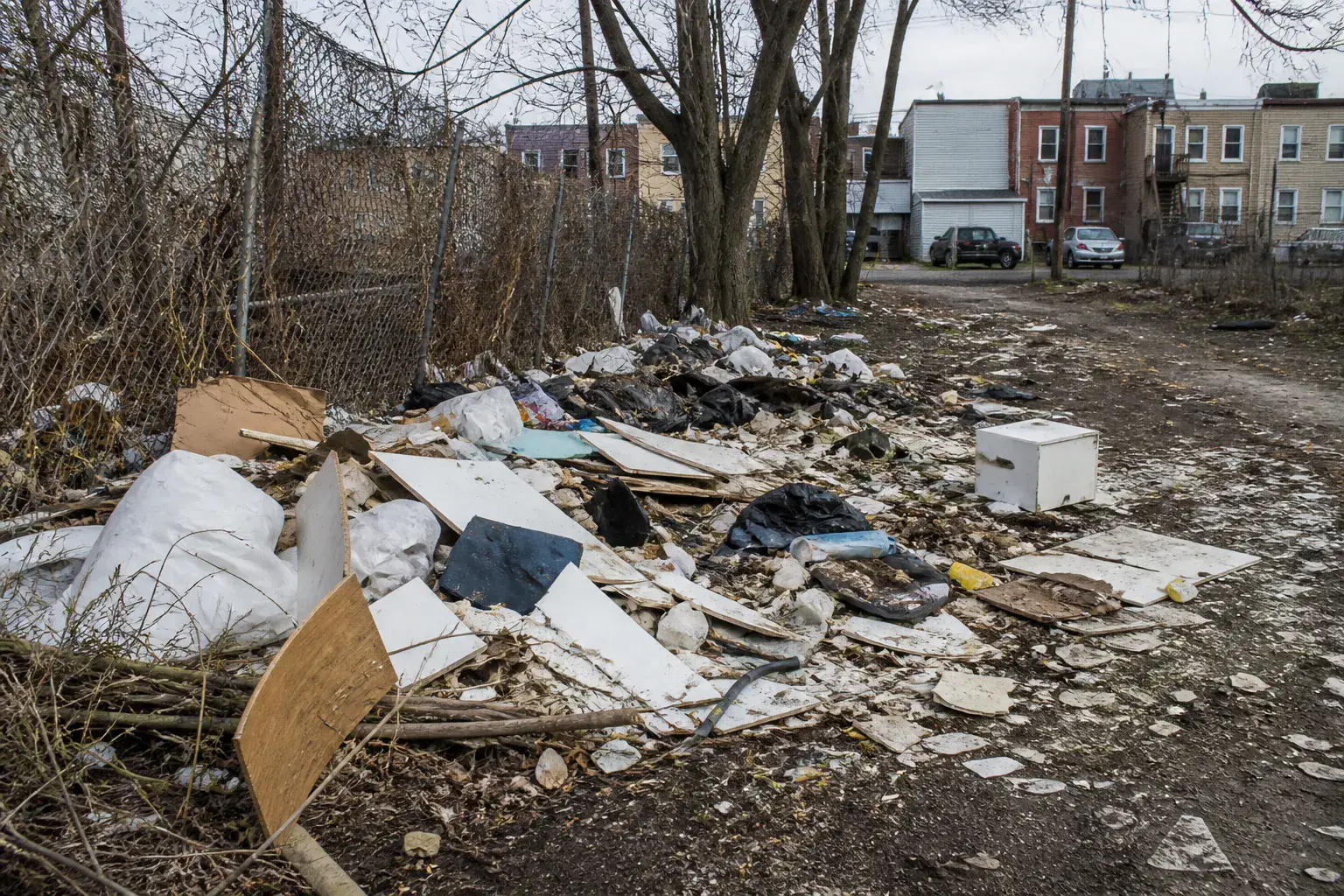
If you witness active dumping in progress, do not approach the perpetrators. Stay inside your vehicle at a safe distance, take photographs of the vehicle license plate, make, and model, and note the physical description of the driver. Call local police non-emergency or 911 if active commercial hazardous waste dumping is underway.
Dumping Classification: Identifying Waste Hazards
Classify the dumped waste to ensure the appropriate municipal or hazardous materials cleanup unit is dispatched.
Concrete rubble, drywall, roofing shingles, mattresses, and furniture. Handled by: City DPW & Code Enforcement.
Piles of discarded tires creating severe fire hazards and stagnant water mosquito breeding. Handled by: County Vector Control.
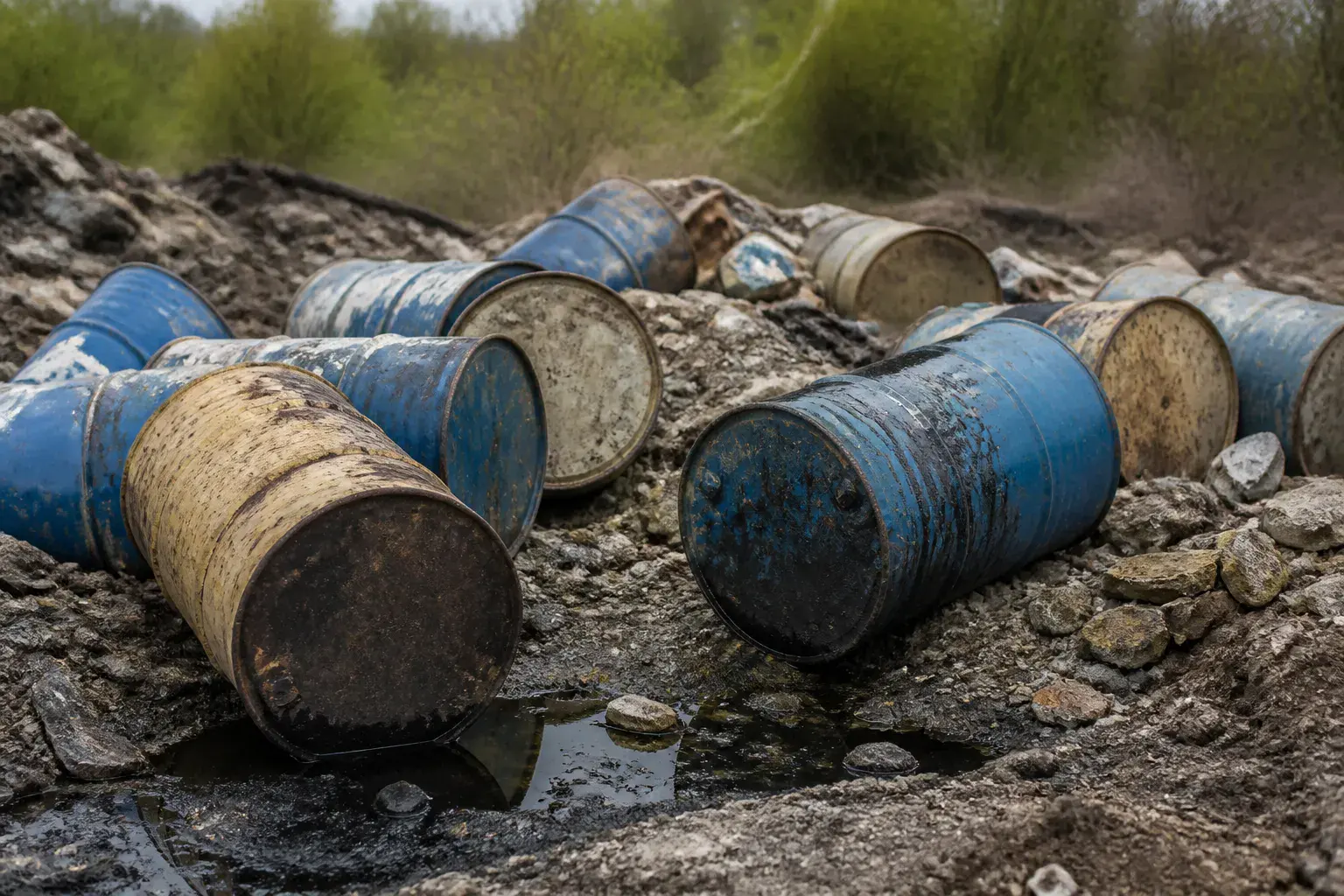
55-gallon drums, paint thinners, motor oil, medical waste, batteries, or asbestos. Handled by: EPA NRC & Fire Hazmat.
Where to Report: Multi-Agency Escalation Matrix
Route dumping reports between city public works, county sheriff environmental detectives, and state regulators.
- Focus: Public streets, alleys, vacant city lots, sidewalks.
- Tool: 311 Mobile App / Municipal Online Request.
- Outcome: Dispatches cleanup crew within 48 to 72 hours; removes blight.
- Focus: Unincorporated county land, commercial dump sites, private property violations.
- Tool: County Environmental Crimes Hotline.
- Outcome: Deploys covert trail cameras; impounds dumper vehicles; issues criminal citations.
- Focus: Toxic industrial waste, waterways, wetlands, hazardous chemical barrels.
- Tool: 1-800-424-8802 / State Environmental Protection Agency.
- Outcome: Superfund hazmat cleanup; federal felony RCRA criminal indictment.
Step-by-Step Guide to Reporting Illegal Dumping
Follow these 5 steps to document the site, file municipal tickets, and trigger environmental law enforcement.
Step 1: Documenting the Scene with Photos & GPS Coordinates
Gather objective evidence from a safe distance:
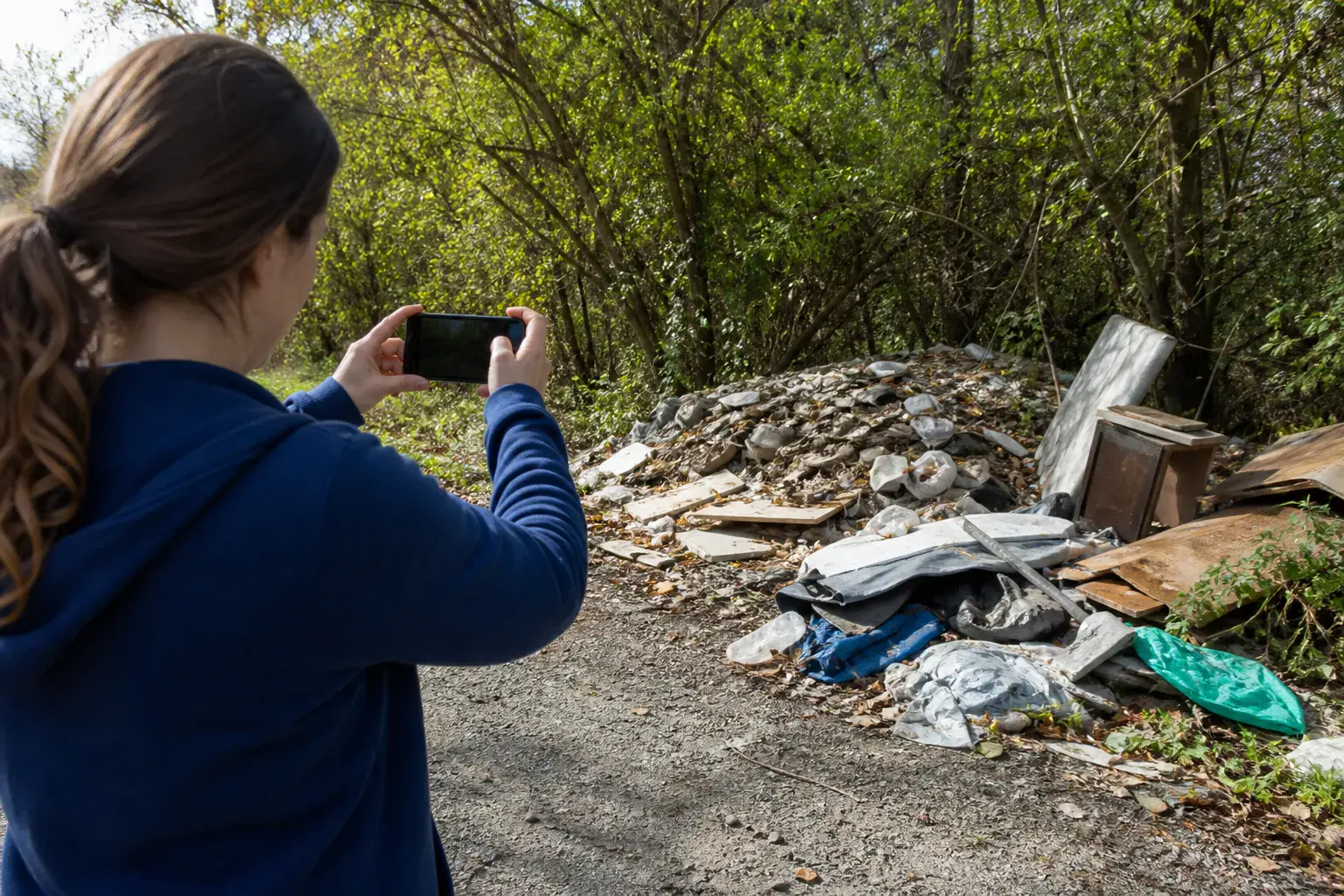
- Capture Clear Photos: Take wide-angle shots showing the dump site context and close-ups of specific debris (e.g., tire piles, paint cans, demolition rubble).
- Record GPS Pin: Drop a pin on Google Maps or Apple Maps to record exact latitude and longitude coordinates.
- Look for Identifying Evidence: Safely look for discarded mail, shipping labels, contractor company names, or invoices among the trash that link the debris to a specific business or address.
Step 2: Submitting an Online Service Ticket via City 311
For municipal street, alley, or park dumping:
- Open your city’s 311 Mobile App or visit the municipal 311 portal.
- Select “Illegal Dumping / Blight Complaint”.
- Upload your photos, enter the GPS location, describe the volume of waste (e.g., “Pickup truck bed load of drywall and 10 scrap tires”), and state if it blocks sidewalks or storm drains.
- Save your 311 Ticket Confirmation Number.
Step 3: Contacting the County Sheriff Environmental Task Force
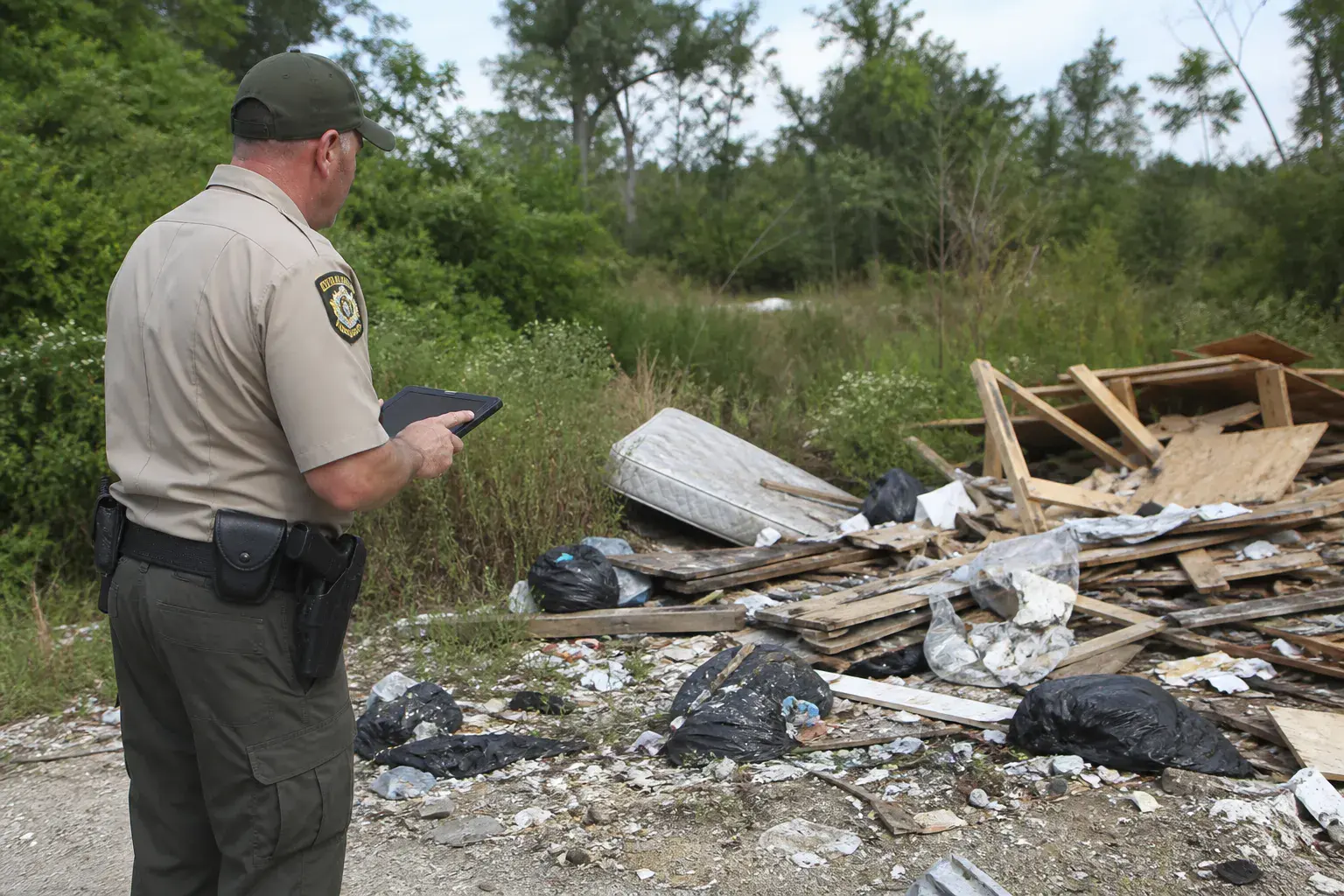
If dumping is recurring or involves commercial haulers on county backroads:
- Call your local County Sheriff Office (Environmental Crimes Unit).
- Provide vehicle license plate numbers and times of day when dumping occurs.
- Deputies deploy hidden motion-activated night vision trail cameras to catch perpetrators in the act, impounding their commercial trucks under state anti-dumping statutes.
Step 4: Reporting Hazardous Substances to the EPA (NRC)
For chemical barrels, toxic waste, or contamination near waterways:
- Call the National Response Center (NRC) at 1-800-424-8802.
- State: “I am reporting an abandoned hazardous waste dump containing chemical drums / petroleum discharge.”
- The NRC dispatches the local Fire Department Hazmat team and federal EPA on-scene coordinators to contain chemical runoff.
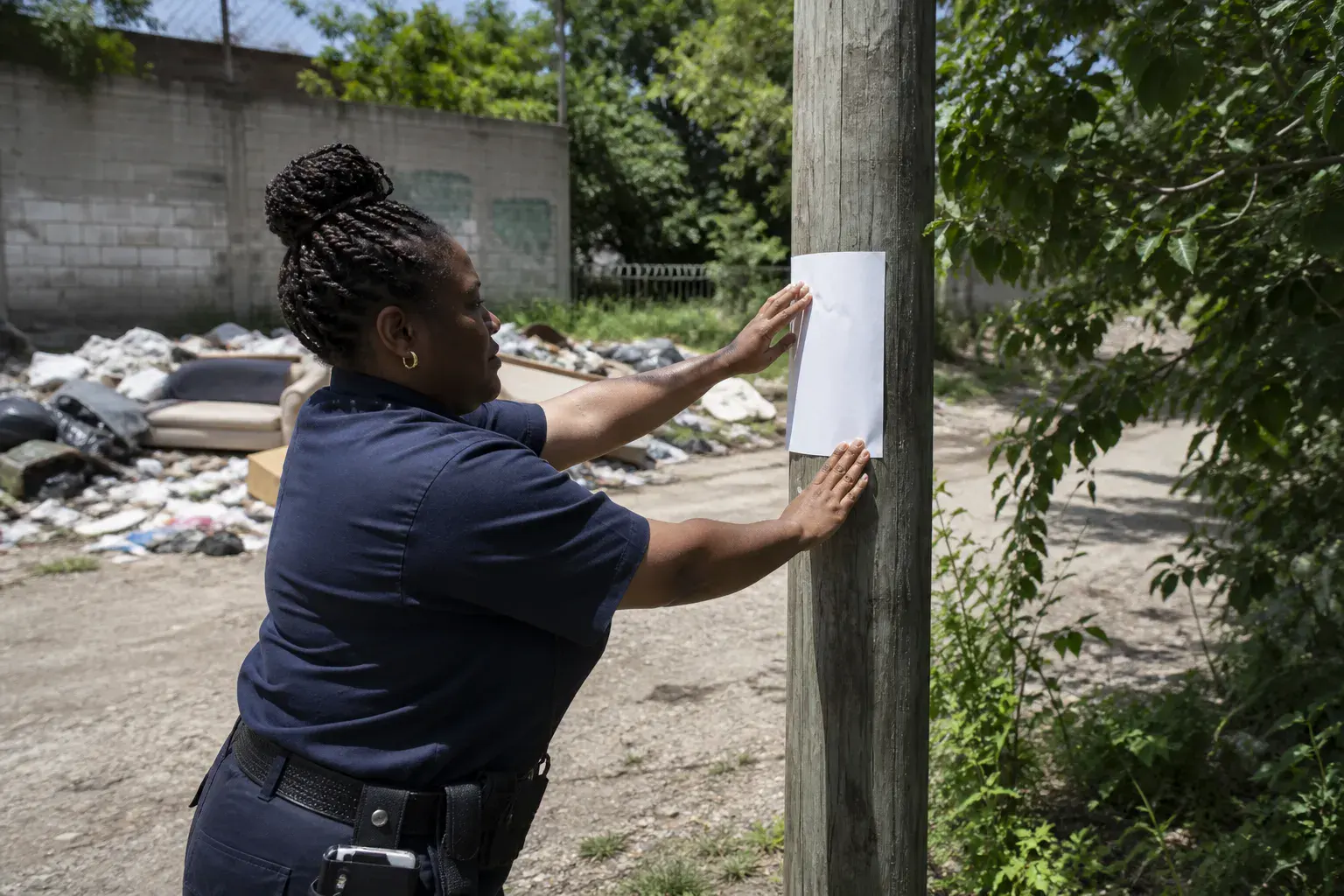
Step 5: Enforcing Private Property Abatement Orders
If dumping occurs on an abandoned private parcel or commercial lot:
- Contact municipal Code Compliance / Code Enforcement.
- Code enforcement officers issue an official Notice to Abate Public Nuisance to the property owner.
- If the property owner fails to clear the site within 14 to 30 days, the city cleans the lot and places a tax lien against the property.
Evidence Preparation Checklist & Submission Roadmap
Take photos, record GPS coordinates, and note vehicle license plate numbers safely.
File online or via 311 app to schedule municipal DPW crew removal within 72 hours.
Report recurring commercial dumpers for trail camera surveillance and truck impoundment.
Call NRC for toxic chemical barrels and enforce code abatement orders on private land.
Formal Illegal Dumping & Environmental Health Hazard Report Template
When submitting a formal written report to Code Enforcement, County Environmental Health, or the District Attorney’s Environmental Crimes Unit, use this format:
SENT VIA CERTIFIED MAIL & ELECTRONIC REPORTING
RETURN RECEIPT REQUESTED: [Tracking Number]
To: [City / County Department of Code Enforcement / Environmental Health]
Attn: Code Compliance Director / Environmental Task Force
[Municipal Agency Address]
[City, State, ZIP]
RE: OFFICIAL CITIZEN COMPLAINT OF UNLAWFUL DUMPING & PUBLIC HEALTH NUISANCE
Reporting Citizen: [Your Full Legal Name – or ‘CONFIDENTIAL CONCERNED CITIZEN’]
Location of Violation: [Street Address, Cross Streets, or GPS Coordinates: Lat/Long]
Assessor Parcel Number (APN) if known: [APN Number]
Property Status: [Public Right-of-Way / Vacant Lot / Private Commercial Property]
Date(s) Observed: [Dates and Times of Violations]
Dear Code Enforcement Officials and Environmental Health Officers:
I am writing to formally report an ongoing public health nuisance, illegal solid waste dumping, and environmental violation occurring at the property location referenced above, in direct violation of municipal code and state health and safety statutes.
FACTUAL DESCRIPTION OF UNLAWFUL DUMPING:
1. NATURE OF ACCUMULATED WASTE: [Specify waste materials: e.g., commercial construction drywall, scrap tires, discarded furniture, chemical containers, asbestos siding, paint barrels].
2. SUSPECT / VEHICLE IDENTIFIERS: On [Date] at approximately [Time], a [Vehicle Description, e.g., White Ford F-350 with commercial dump trailer, License Plate #XXXXXX] was observed discharging unauthorized waste onto the site. Photographs documenting vehicle license plates and dumping actions are enclosed.
3. PUBLIC SAFETY & ENVIRONMENTAL THREAT: The illegal waste is situated in close proximity to [describe hazard: e.g., residential sidewalks, municipal storm drainage inlet, public park, natural creek/waterway], posing an acute fire risk and biological hazard.
STATUTORY CITATION & ABATEMENT REQUEST:
Under municipal nuisance abatement ordinances and state solid waste management codes, the unlawful disposal of solid waste on unpermitted land constitutes a misdemeanor and civil public nuisance subject to mandatory administrative abatement.
I formally request that your department:
1. Dispatch an environmental code compliance officer to inspect the site and issue a formal Notice of Violation;
2. Issue an immediate order for the lawful removal and disposal of all accumulated debris at a certified landfill;
3. Subpoena registered owner records for vehicle license plate #[License Plate] to assess administrative cleanup fines against the polluter.
Please provide confirmation of this complaint and the assigned Code Enforcement Case Tracking Number to the contact information below.
Sincerely,
_________________________________________
[Your Signature]
[Your Printed Legal Name – or Anonymous]
[Your Address]
Telephone: [Your Phone Number]
Email: [Your Email Address]
ENCLOSURES:
1. Date-stamped photographic evidence of illegal waste and vehicle identifiers
2. Satellite map depicting exact parcel boundary and dumping perimeter



1 thought on “How to Report Illegal Dumping: Stop Blight & Environmental Waste”