⚡ Quick Answer: How to Report Medical Billing Fraud
- Immediate Action / Dispute Window: Request an itemized billing statement with specific CPT/HCPCS procedure codes within 30 days, and file a formal dispute with your insurer or the CMS No Surprises Help Desk within 120 days.
- Primary Regulatory Agencies: U.S. Department of Health and Human Services Office of Inspector General (HHS-OIG Hotline: 1-800-HHS-TIPS), Centers for Medicare & Medicaid Services (CMS), and your State Insurance Commissioner.
- Statutory / Legal Remedy: Mandatory bill recalculation under the federal No Surprises Act (45 CFR § 149), civil monetary penalties up to $10,000 per violation against healthcare providers, and whistleblower recovery under the federal False Claims Act (31 U.S.C. § 3729).
Receiving an unexpected medical bill charging thousands of dollars for routine outpatient care or finding charges for diagnostic procedures you never underwent is an all-too-common crisis for American patients. Understanding how to report medical billing fraud—including predatory hospital balance billing, unbundling, and diagnostic upcoding—is the first step toward invalidating unlawful patient debt and triggering federal regulatory enforcement.

Healthcare providers, medical billing clearinghouses, and hospital networks operate under strict statutory standards governing billing transparency and coding accuracy. Under federal statutes including the No Surprises Act and the False Claims Act, submitting fraudulent reimbursement claims to insurers or billing patients for out-of-network emergency care carries severe civil and administrative penalties. This guide details the forensic evidence required to audit clinical billing codes, step-by-step reporting protocols for state and federal oversight bodies, and formal dispute notice templates.
Deceptive Practices in Healthcare Billing: Upcoding, Unbundling, and Phantom Services
Medical billing fraud generally manifests through specific manipulative practices designed to inflate hospital revenues at the expense of patients and insurance underwriters. Recognizing the clinical markers of these violations enables you to contest fraudulent line items effectively:
- CPT Code Upcoding: Billing for a higher-complexity diagnostic code or prolonged physician evaluation than was actually delivered. A common example involves billing a brief 10-minute outpatient visit as a comprehensive 45-minute Level 5 evaluation (CPT 99215 instead of CPT 99212).
- Procedural Unbundling: Separately billing fragmented component codes that are legally mandated to be billed under a single comprehensive package rate. For instance, billing an incision, organ excision, and suture closure as three separate surgical events rather than a unified procedure code.
- Phantom Billing & Duplicate Charges: Invoicing for durable medical equipment, lab cultures, or bedside monitoring that was ordered but never administered, or submitting identical charges across consecutive billing cycles.
- Balance Billing & Out-of-Network Ambush Charges: Illegally billing an insured patient for the residual balance between an out-of-network provider’s inflated charge and the insurer’s median in-network rate for emergency treatment or non-emergency care delivered at in-network hospital facilities.
⚖️ Facing Disputed Medical Collections Under $10,000?
Check your state small claims court limits, medical debt statute of limitations, and consumer rights protections.
Statutory Protections: The No Surprises Act and Federal False Claims Mandates
Congress enacted the federal No Surprises Act (Public Law 116-260) to eliminate unexpected balance billing in emergency departments and non-emergency situations where patients have no reasonable opportunity to select an in-network physician.
Under 45 CFR § 149.410, healthcare providers are prohibited from billing patients more than the standard in-network cost-sharing requirement (copay or in-network coinsurance) for emergency services, air ambulance transport, and auxiliary specialist services (such as anesthesiology, radiology, and pathology) performed at an in-network facility. Any provider attempting to balance-bill patients beyond these statutory ceilings faces federal civil monetary fines up to $10,000 per violation administered by the Centers for Medicare & Medicaid Services (CMS).
Forensic Audit Framework: How to Decode Your Medical Records and Itemized Bills
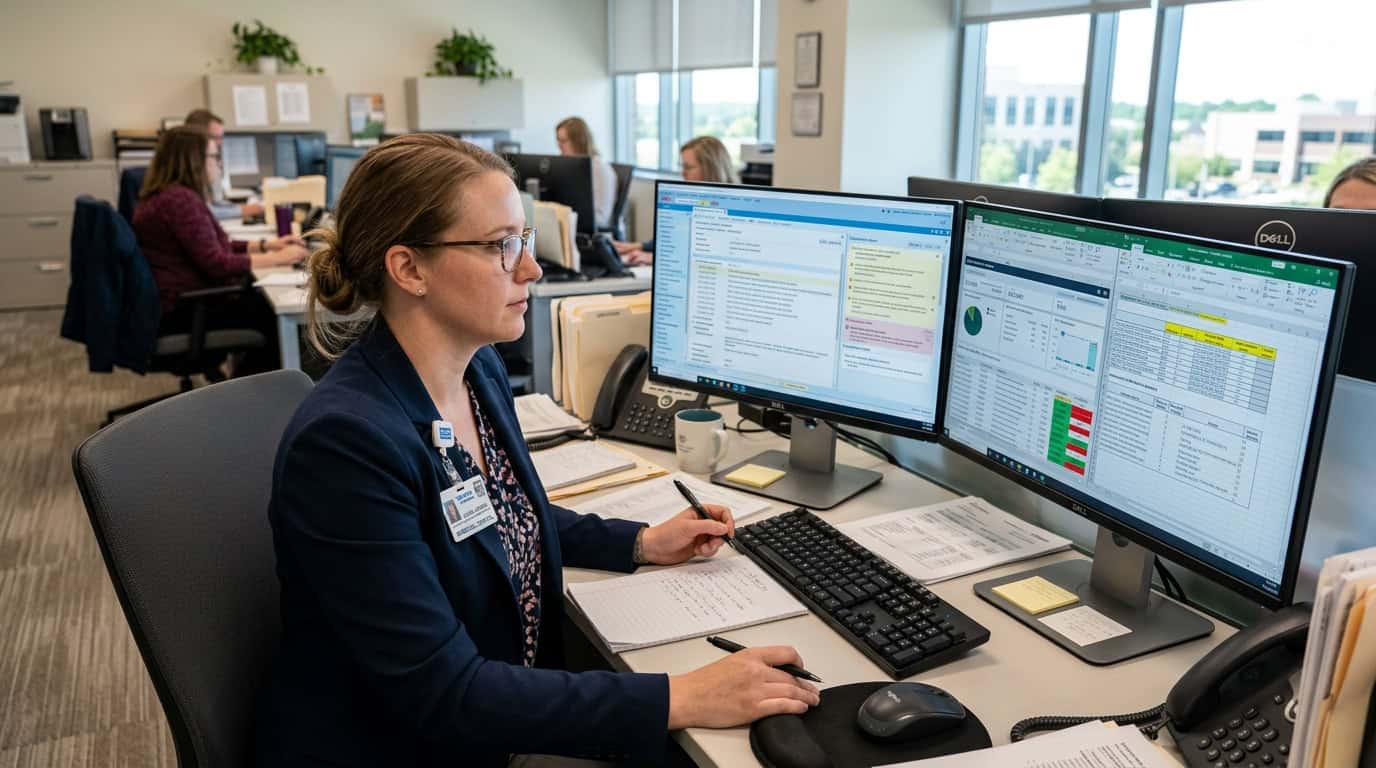
Before submitting regulatory complaints, you must assemble clinical and financial evidence to establish fraudulent coding. Follow this four-step forensic protocol:
- Request a Line-Item Master Fee Ledger: Demand a complete itemized billing invoice that lists 5-digit Current Procedural Terminology (CPT) codes, Healthcare Common Procedure Coding System (HCPCS) codes, revenue codes, and NDC medication identifiers for every syringe, medication dosage, and clinician consultation.
- Obtain the Medical Chart and Operative Notes: Submit a formal HIPAA medical records release request under 45 CFR § 164.524. Compare the physician’s contemporaneous clinical progress notes and surgical timing logs directly against the invoiced CPT codes. If the chart documents 15 minutes of routine suturing but the billing department charged for a complex multi-hour reconstruction, you have prima facie evidence of upcoding.
- Review the Insurance Explanation of Benefits (EOB): Compare the hospital’s charges against your health plan’s EOB statement to verify whether the insurer rejected line items as unbundled or uncovered, and ensure the provider is not attempting to balance-bill non-allowed amounts.
- Verify In-Network Facility Status: Check whether the hospital facility was participating in your network at the date of service, which triggers mandatory in-network cost-sharing protections under federal law.
Where to File Formal Medical Billing Fraud Complaints
Depending on whether you are covered by commercial employer insurance, individual exchange policies, or government healthcare programs, submit formal complaints to the following verified regulatory oversight bodies:
- HHS Office of Inspector General (HHS-OIG): If the fraudulent billing involves Medicare, Medicaid, or TRICARE beneficiaries, submit a sworn complaint to the HHS-OIG Hotline at 1-800-HHS-TIPS (1-800-447-8477) or online at oig.hhs.gov. HHS-OIG possesses federal subpoena power and investigates criminal healthcare fraud.
- CMS No Surprises Help Desk: For balance billing disputes involving emergency care or out-of-network hospital facility providers, file directly with the federal Centers for Medicare & Medicaid Services at 1-800-985-3059 or submit online via cms.gov/nosurprises.
- State Department of Insurance (DOI): State insurance commissioners regulate private health insurance plans and enforce state-level balance billing restrictions. File an administrative grievance with your state DOI to compel insurer review.
- Consumer Financial Protection Bureau (CFPB): If predatory medical debt collection agencies threaten your credit score or fail to validate disputed charges, submit a debt collection grievance at consumerfinance.gov/complaint.
Before you go…
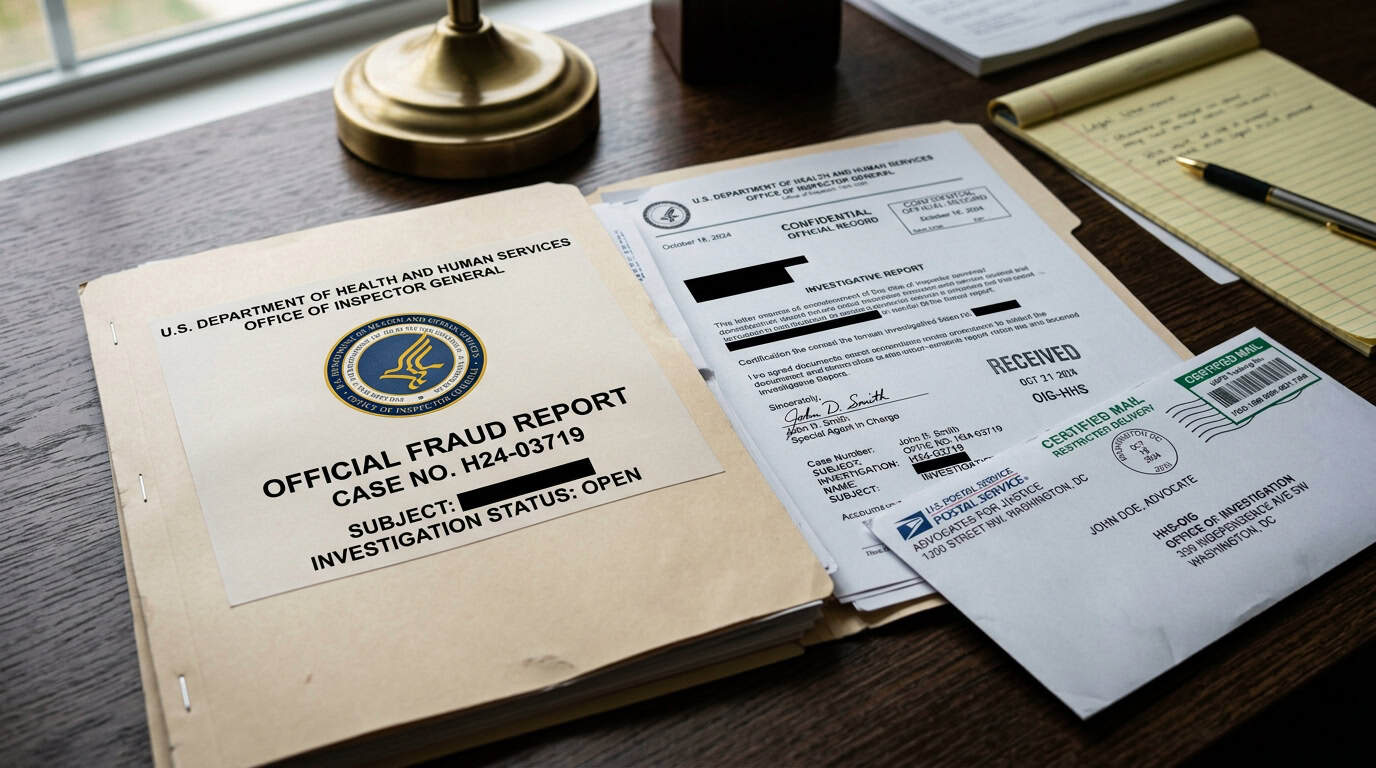
Challenging fraudulent medical bills requires prompt action and an uncompromising paper trail. By demanding itemized CPT coding ledgers, establishing certified mail receipt records, and routing documented violations to federal and state health care examiners, you prevent unlawful medical debt from harming your family’s financial stability.
HowToReport.org is an independent educational site — not a government agency. We link to official .gov and .org sources, but we cannot file a complaint for you or give legal advice. Read our full Legal Disclaimer & Safe Harbor →
Related Statutory Reporting Guides & Citizen Protections
Official step-by-step reporting protocols in this regulatory category.


What happens next
- Most agencies send an acknowledgment or reference number — save it with your copies.
- Investigations vary by agency; complex cases can take weeks or months.
- If you do not hear back within the timeframe listed on the agency site, follow up in writing.
- Keep reporting to additional agencies if your issue crosses categories (for example, fraud plus billing).